
Even self-proclaimed plant assassins can keep these resilient beauties alive!
Introduction: The Myth of the “Black Thumb”
These impossible-to-kill houseplants are perfect for beginners who want beautiful indoor greenery with minimal effort. Do you look at lush indoor jungles on social media and think, “I could never”? Have you brought home hopeful green friends only to watch them slowly fade despite your best efforts? These impossible-to-kill houseplants are perfect for beginners who want beautiful indoor greenery without complicated care routines. You’re not alone—and more importantly, you’re not doomed to a plant-less existence. The secret isn’t having a mythical green thumb; it’s choosing the right plants.
This guide introduces you to ten remarkably resilient houseplants that tolerate inconsistent care, survive occasional neglect, and bounce back from beginner mistakes. These aren’t just survivors; they’re attractive, personality-filled plants that will build your confidence and bring life to your space. Consider this your official pardon from plant guilt!
What Makes a Plant “Unkillable”?
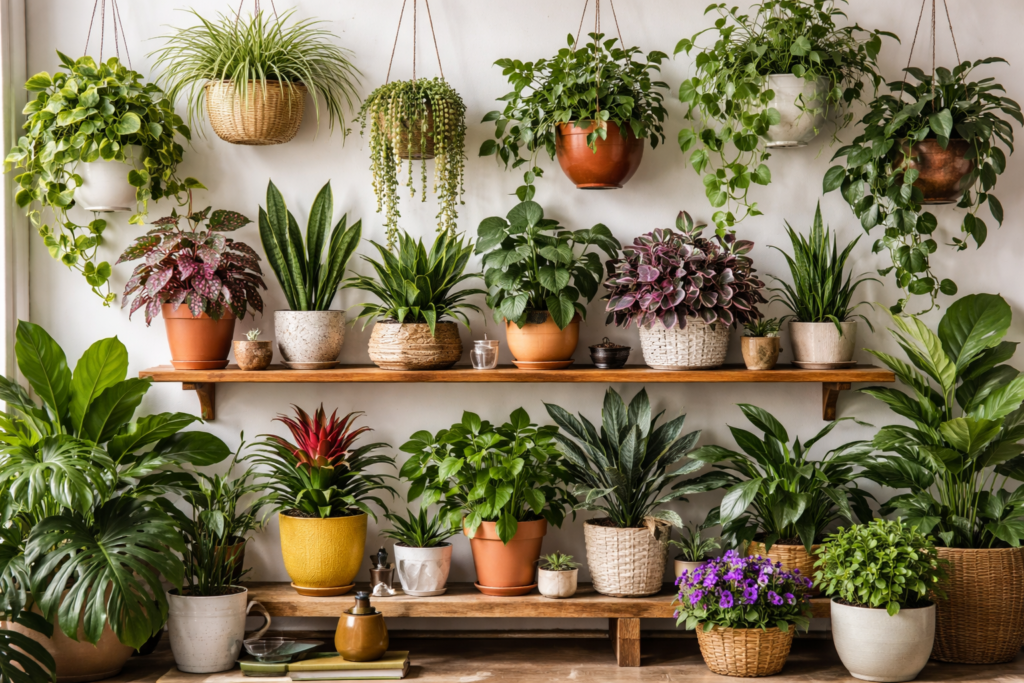
Before we meet our contenders, let’s understand what traits make these plants so resilient:
- Forgiving Watering Needs: They tolerate both occasional droughts and slight overwatering.
- Adaptable Light Requirements: They survive in less-than-ideal lighting conditions.
- Pest and Disease Resistance: They’re naturally tough against common problems.
- Visible Communication: They show clear signs when they need water or care.
- Fast Recovery: They bounce back quickly after receiving what they need.
Now, let’s meet your new practically-indestructible plant friends!
The Champion’s List: 10 Plants That Won’t Quit on You
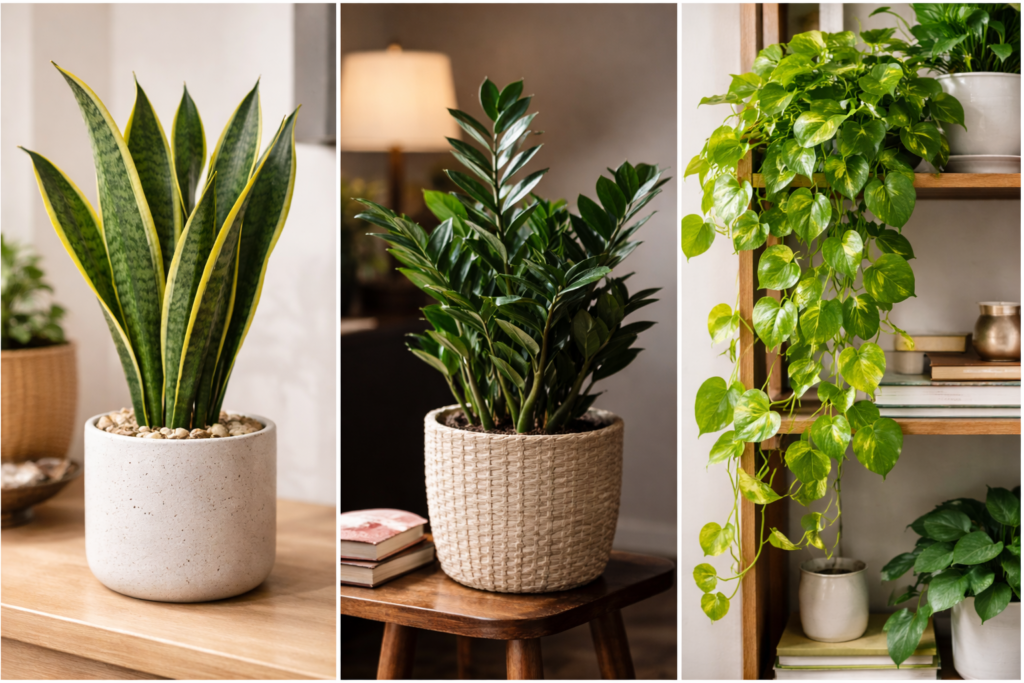
1. The Unshakeable Snake Plant (Sansevieria trifasciata)
Why it survives: This plant is practically a houseplant superhero. It thrives on neglect, purifies air, and grows in almost any light condition.
Care basics: Water only when soil is completely dry (every 2-8 weeks depending on light). Tolerates low to bright indirect light.
Pro tip: The taller varieties like ‘Laurentii’ make dramatic floor plants, while shorter ones like ‘Bird’s Nest’ are perfect for shelves.
Where to place it: Bedrooms (it releases oxygen at night), dark corners, or as a striking architectural element.
2. The Perpetual ZZ Plant (Zamioculcas zamiifolia)
Why it survives: With waxy leaves and potato-like rhizomes that store water, the ZZ can survive months without attention.
Care basics: Water every 3-4 weeks. Low to bright indirect light. Dust those shiny leaves occasionally.
Pro tip: The new ‘Raven’ variety has stunning near-black foliage that deepens with maturity.
Where to place it: Offices, rooms with fluorescent lighting, or as a modern accent in minimalistic spaces.
https://www.almanac.com/houseplants
3. The Trailblazing Pothos (Epipremnum aureum)
Why it survives: Fast-growing and communicative—it wilts visibly when thirsty, then perks up within hours of watering.
Care basics: Water when top inch of soil is dry. All light conditions except direct sun. The more variegation (white/yellow), the more light it needs to maintain patterns.
Pro tip: Can grow in water indefinitely! Take cuttings and create new plants easily.
Where to place it: Hanging baskets, high shelves where vines can trail, or climbing a moss pole.
4. The Determined Spider Plant (Chlorophytum comosum)
Why it survives: Produces plantlets (“spiderettes”) constantly, ensuring its legacy continues even if the mother plant faces challenges.
Care basics: Water when soil feels dry. Bright indirect light encourages more plantlets. Non-toxic to pets.
Pro tip: If tips brown (from fluoride in water), use distilled or rainwater.
Where to place it: Kitchens, hanging in sunny windows, or anywhere you want a cheerful, cascading plant.
5. The Tenacious Cast Iron Plant (Aspidistra elatior)
Why it survives: True to its name, it withstands low light, temperature fluctuations, and irregular watering—conditions that would defeat lesser plants.
Care basics: Water when soil is dry. Thrives in low light. Wipe broad leaves occasionally.
Pro tip: The variegated ‘Milky Way’ adds speckled interest to dark corners.
Where to place it: Dim entryways, north-facing rooms, or challenging spots other plants avoid. http://growplantcare.com
6. The Adaptable Chinese Evergreen (Aglaonema)
Why it survives: Beautifully patterned leaves with incredible tolerance for low light and irregular care.
Care basics: Water when top soil is dry. Low to medium indirect light. Many stunning varieties available.
Pro tip: The ‘Red Siam’ variety has gorgeous pink veins; ‘Silver Bay’ has striking silver patterns.
Where to place it: Bathrooms (loves humidity), living rooms, or as colorful tabletop accents.
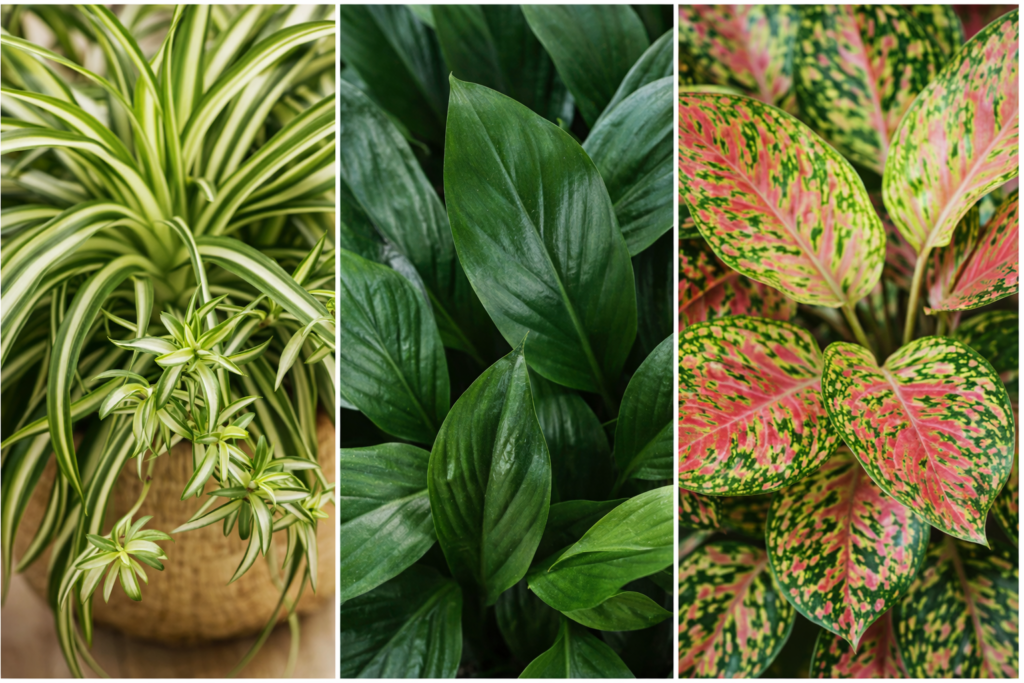
7. The Resilient Peace Lily (Spathiphyllum)
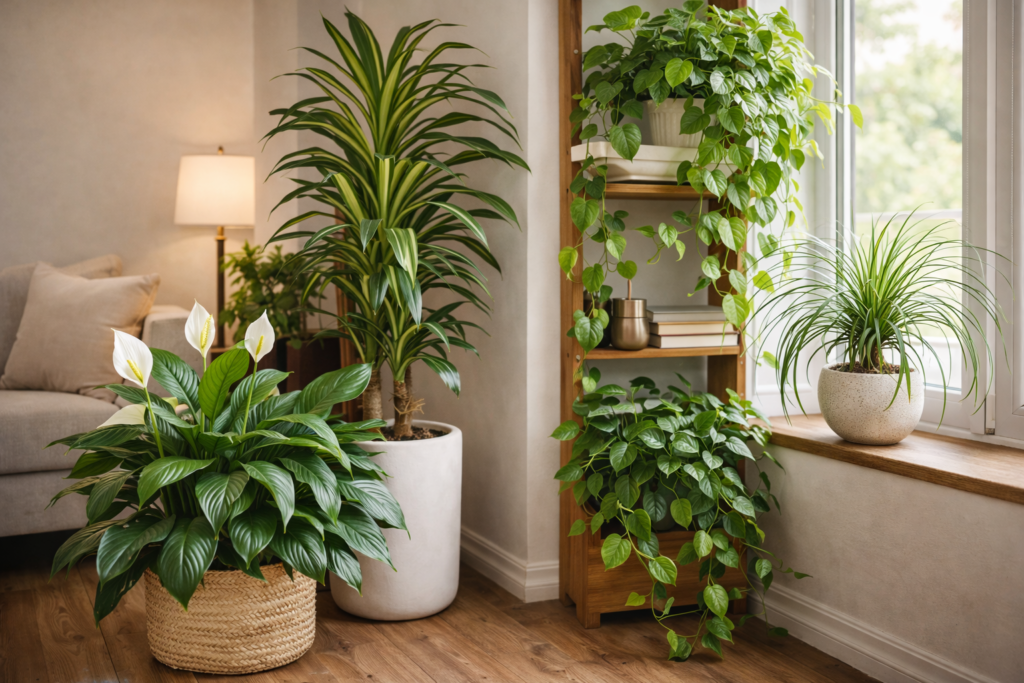
Why it survives: It dramatically wilts when thirsty (making watering needs obvious), then revives completely within hours.
Care basics: Water when leaves droop. Medium to low light. Wipe leaves to keep them glossy.
Pro tip: The white “flowers” (actually spathes) appear more in brighter light.
Where to place it: Bedrooms (excellent air purifier), offices, or as an elegant floor plant.
8. The Hardy Dracaena (Dracaena marginata)
Why it survives: Tree-like and architectural, it tolerates dry air and occasional watering lapses.
Care basics: Water when soil is dry. Medium indirect light. Brown tips may indicate low humidity or fluoride sensitivity.
Pro tip: Can grow quite tall—great for filling vertical space.
Where to place it: Living room corners, beside furniture, or as a natural room divider.
9. The Unfussy Philodendron Heartleaf (Philodendron hederaceum)
Why it survives: Similar to pothos but with heart-shaped leaves, it grows steadily with minimal fuss.
Care basics: Water when top soil is dry. Low to bright indirect light. Easy to propagate.
Pro tip: The ‘Brasil’ variety has beautiful lime-green variegation.
Where to place it: Hanging near windows, trailing from mantels, or climbing small trellises.
10. The Persistent Ponytail Palm (Beaucarnea recurvata)
Why it survives: That bulbous trunk is a water reservoir! This quirky plant is actually a succulent, not a true palm.
Care basics: Water thoroughly, then let soil dry completely (weeks between watering). Bright light preferred.
Pro tip: The trunk swells with water storage—don’t worry, that’s normal!
Where to place it: Sunny windowsills, desert-themed arrangements, or as a conversation-starting focal point.
The Care Cheat Sheet: Keeping Your Survivors Thriving
Even these tough plants appreciate good care. Follow this simple routine:
- The Finger Test: Before watering, insert your finger into the soil up to the second knuckle. If dry, water; if moist, wait.
- Drainage is Non-Negotiable: Always use pots with drainage holes.
- Dust the Leaves: Wipe with damp cloth every month to maximize photosynthesis.
- Seasonal Adjustments: Water less in winter when plants grow slower.
- Observe and Respond: Your plant will tell you what it needs—learn its language.
Building Confidence Through Success
Starting with these resilient plants does more than decorate your space—it builds your plant care confidence. Each new leaf, each successful month, teaches you observational skills and timing. You’ll learn that plants are living beings with rhythms and preferences, not decoration to be maintained perfectly.
The true secret? There’s no such thing as a black thumb—only mismatched plants and owners. By choosing plants that match your lifestyle and environment, you’re setting yourself up for success. One resilient plant leads to another, and before you know it, you’ll have the green thumb you never believed you could cultivate. With these impossible-to-kill houseplants, anyone can enjoy healthy indoor plants even with a busy lifestyle.
Ready to begin? Choose one plant from this list that speaks to you. Master its care. Celebrate its growth. Then, when you’re ready, welcome another. Your indoor jungle awaits—and it’s much hardier than you think.