
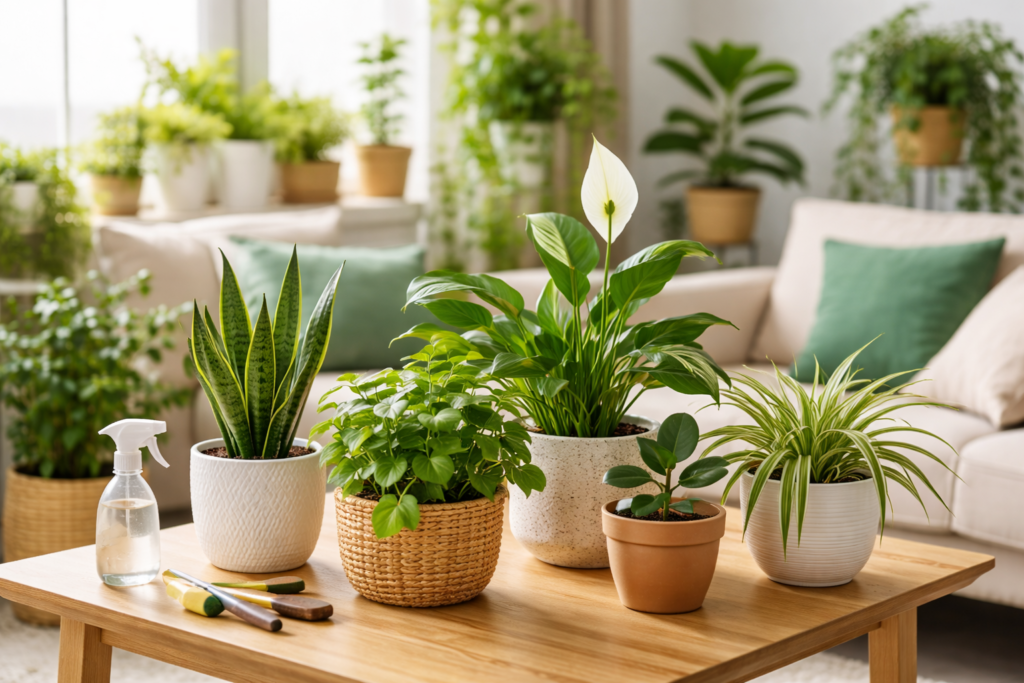
Bringing the outdoors inside with houseplants is one of the most rewarding home endeavors. These living decorations purify our air, boost our mood, and add a vibrant touch of life to any room. Yet, for many new plant owners, the journey can begin with uncertainty. Why are the leaves turning yellow? Is it getting too much sun or not enough? Fear not—cultivating a thriving indoor jungle is less about having a “green thumb” and more about understanding a few fundamental principles. This comprehensive guide breaks down indoor plant care into simple, actionable steps to ensure your plants don’t just survive, but flourish. Indoor plant care helps prevent yellow leaves, weak roots, and slow growth.
Step 1: The Right Plant for the Right Place
Success begins with matching a plant to your environment, not the other way around. Before you fall in love with a light-loving succulent, assess your space.
- Light is Everything: Light is food for plants. Light supports photosynthesis in plants. Understand your light conditions:
- Bright Direct Light: Unobstructed sunlight through a south or west-facing window. Ideal for cacti, succulents, and fiddle leaf figs.
- Bright Indirect Light: The sweet spot for most tropical plants. The plant sees the sky but isn’t scorched by the sun’s rays. Think spots near east-facing windows or a few feet back from a south-facing one. Perfect for Monsteras, Pothos, and Philodendrons.
- Consistent indoor plant care improves leaf color, root strength, and overall plant health.
- Low Light: No direct sunlight, but still ambient light from a north-facing window or the interior of a bright room. Choose wisely: Snake Plants, ZZ Plants, and Cast Iron Plants are champions here.
- Consider Your Lifestyle: If you travel often or tend to forget watering, drought-tolerant plants like Snake Plants or ZZ Plants are forgiving. If you love the ritual of care, a humidity-loving fern or Calathea might be a rewarding challenge.
Step 2: Indoor Plant Care: Mastering the Art of Watering
Overwatering is the number one cause of houseplant demise. The goal is consistent moisture, not constant sogginess.
- The Golden Rule: Check, Don’t Schedule: Ditch the rigid “once-a-week” routine. Watering needs change with seasons, light, and humidity.
- The Finger Test: Insert your finger into the soil up to the second knuckle. If it feels dry, it’s time to water. If it feels moist, wait. For plants that prefer to dry out completely (like succulents), wait until the soil is completely dry throughout the pot.
- Water Thoroughly: When you water, do so until water runs freely out of the drainage holes. This ensures the entire root ball is hydrated and flushes out excess salts. Always empty the saucer or cache pot after 15-20 minutes to prevent “wet feet,” which leads to root rot.
- Use Room Temperature Water: Cold water can shock delicate roots. Let tap water sit out overnight to allow chlorine to dissipate.
- For more plant tips, visit our homepage at Grow Plant Care.
- https://growplantcare.com
Step 3: The Foundation: Potting and Soil
Your plant’s home is critical to its health.
- Drainage is Non-Negotiable: Always choose pots with drainage holes. This is the simplest way to prevent waterlogged roots.
- The Right Soil Mix: Regular garden soil is too dense for containers. Use a high-quality, well-draining potting mix. For specific plants:
- Succulents & Cacti: Use a specialized gritty, sandy mix.
- Orchids: Use a chunky, bark-based mix for air flow.
- African Violets: Use a light, peat-based mix.
- Repotting: Plants typically need repotting every 1-2 years in spring or early summer when they become root-bound (roots circling the pot or growing from the drainage holes). Move up only 1-2 inches in pot diameter to avoid overwhelming the root system with too much wet soil.
Step 4: Creating a Comfortable Climate
Recreate the humid, stable environments most houseplants originate from.
- Humidity: Average home humidity (30-50%) is often too low for tropical plants. Boost it by:
- Grouping plants together to create a microclimate.
- Placing pots on a pebble tray filled with water (ensure the pot sits above the water line).
- Using a humidifier nearby—this is the most effective method.
- Temperature: Most houseplants prefer the same temperatures we do: between 65-75°F (18-24°C). Avoid placing them near heating vents, radiators, air conditioning drafts, or cold windows in winter.
Step 5: Nourishment and Maintenance
Plants need food and grooming to look their best.
- Fertilizing: During the active growing season (spring and summer), feed your plants with a balanced, water-soluble fertilizer, diluted to half the recommended strength, about once a month. Never fertilize a stressed, dry, or dormant plant (typically in fall and winter).
- Cleaning Leaves: Dust on leaves blocks sunlight. Gently wipe large leaves with a damp cloth. For smaller-leaved plants, give them a lukewarm shower or mist and pat dry.
- Pruning and Grooming: Regularly remove yellow or brown leaves with clean scissors. Pinch back leggy stems to encourage bushier growth. This directs the plant’s energy to healthy foliage.
Step 6: Vigilance: Preventing Pests and Problems
Early detection is key to managing issues.
- Common Pests: Watch for sticky residue (aphids, scale), fine webbing (spider mites), or cottony fluff (mealybugs). Isolate any affected plant immediately. Treat with insecticidal soap, neem oil, or by wiping leaves with a diluted rubbing alcohol solution.
- Reading the Leaves: Your plant communicates.
- Yellow Leaves: Often a sign of overwatering or poor drainage. Can also indicate under-watering or nutrient deficiency.
- Brown, Crispy Edges: Usually low humidity or inconsistent watering (too dry).
- Leggy Growth or Small Leaves: Insufficient light.
- Pale or Bleached Leaves: Too much direct sun (sunburn).
A Simple Starting Point: Easy-Care Plant Recommendations
Build confidence with these resilient varieties:
- Snake Plant (Sansevieria): Thrives on neglect. Tolerates low light and infrequent watering.
- ZZ Plant (Zamioculcas zamiifolia): A stunning, architectural plant that forgives drought and low light.
- Pothos (Epipremnum aureum): A fast-growing vine that tolerates a wide range of light conditions. Its trailing vines are incredibly satisfying.
- Spider Plant (Chlorophytum comosum): Loves bright, indirect light and produces adorable “pups” (baby plants) on runners.
- Peace Lily (Spathiphyllum): Shows you when it’s thirsty by drooping slightly, then bounces back after watering. Produces beautiful white blooms.
Conclusion: Cultivating Patience
Plant care is a practice in observation and gentle partnership with nature. There will be learning moments—a dropped leaf or a pause in growth. Each is a clue, not a failure. Start with one or two easy plants, learn their rhythms, and expand your collection as your confidence grows.
By providing the core essentials of appropriate light, thoughtful watering, and a stable environment, you create the foundation for healthy green growth. The reward is a living, breathing space that echoes with vitality, bringing a piece of the serene, growing world into your daily life. Enjoy the quiet joy of watching new leaves unfurl—it’s a testament to your attentive care. With consistent indoor plant care, your houseplants will stay green, strong, and beautiful all year.