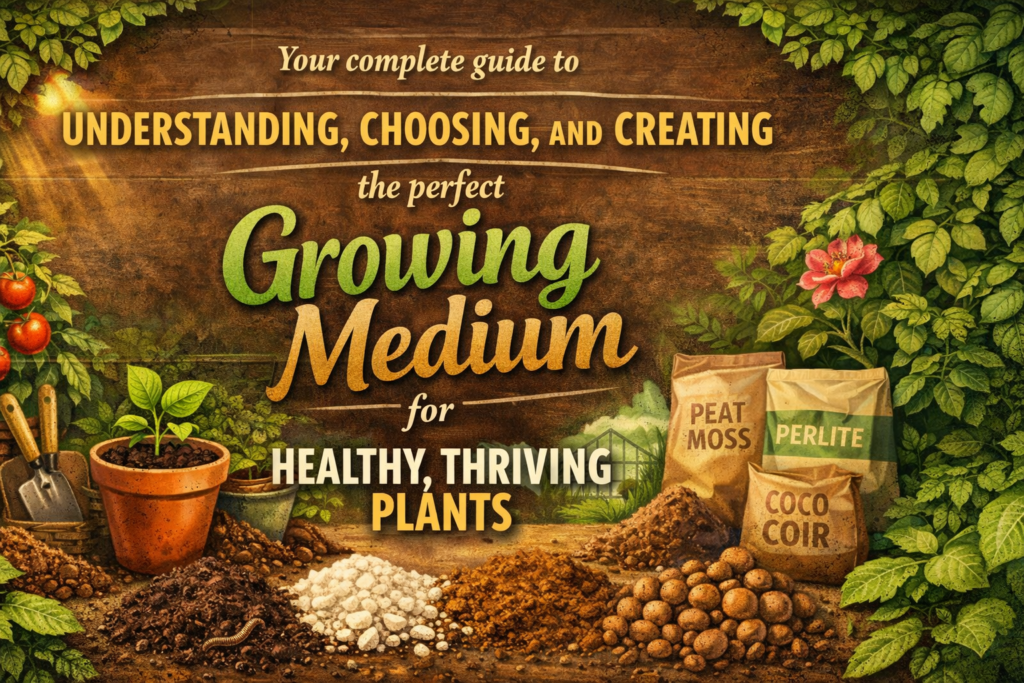
Your complete guide to understanding, choosing, and creating the perfect growing medium for healthy, thriving plants
Introduction: The Foundation of Every Healthy Plant
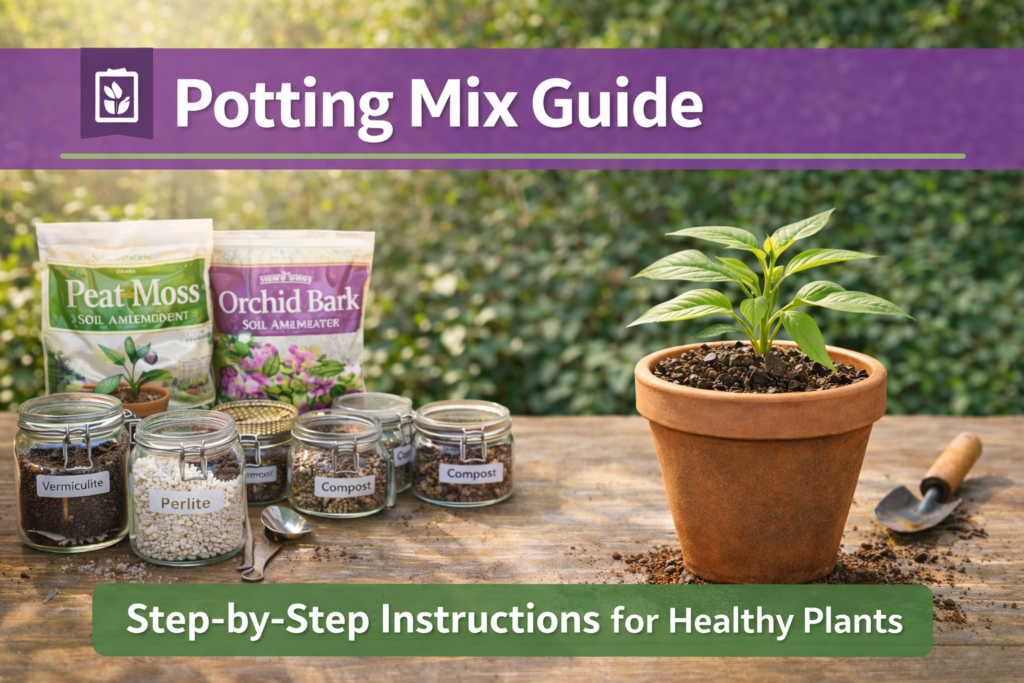
Potting mix guide is the foundation of every healthy plant, providing roots with the right balance of air, water, and nutrients. Beneath every lush leaf and vibrant bloom lies a secret world: the soil. Or more accurately for container plants—the potting mix. This isn’t just “dirt”; it’s a carefully balanced ecosystem that provides support, nutrition, air, and water to your plant’s roots. Choosing the wrong mix is like building a house on sand—it might stand for a while, but it will never thrive.
This guide will transform you from a confused bag-reader to a confident mix-chooser. We’ll explore what makes each component special, which plants need which mixes, and how to read those confusing bag labels. Whether you’re repotting a delicate orchid or starting vegetable seedlings, understanding potting mix is your key to gardening success. Our potting mix guide makes it easy to understand how to prepare and use the right mix for container plants. With this potting mix guide, gardeners can improve drainage, aeration, and plant growth.
The Critical Difference: Garden Soil vs. Potting Mix
First, let’s settle a common confusion that costs many plants their lives:
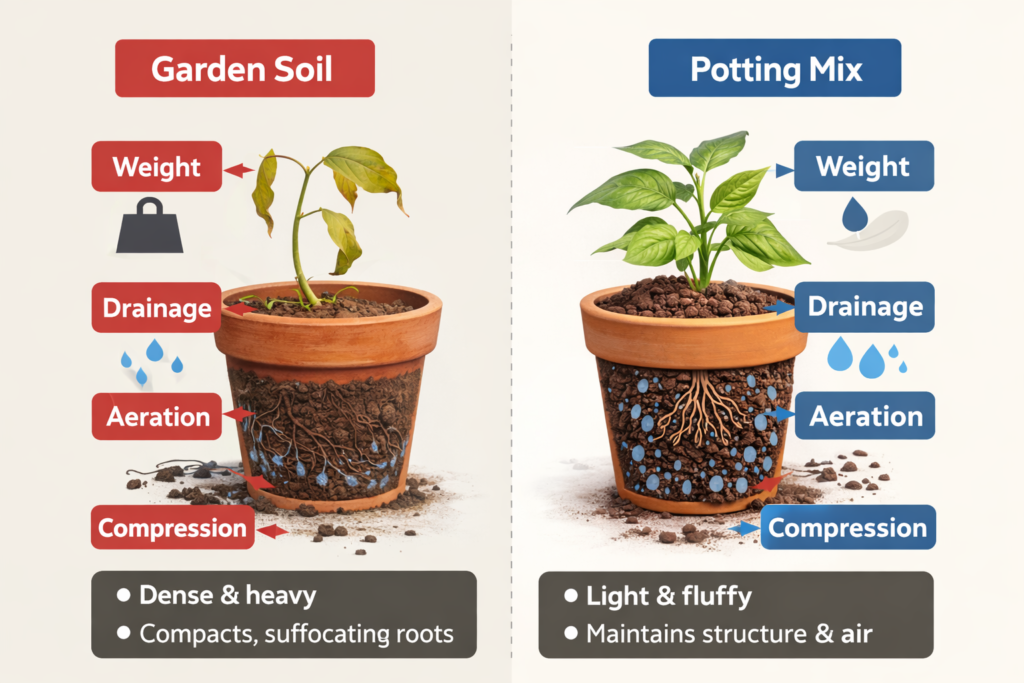
Garden Soil (The Outdoor Medium):
- Dense and heavy, designed for ground planting
- Contains microorganisms beneficial for in-ground ecosystems
- Compacts severely in containers, suffocating roots
- Never use in pots—it becomes concrete-like and prevents drainage
Potting Mix (The Container Medium):
- Light and fluffy, specifically engineered for containers
- Contains ingredients that maintain structure and aeration
- Drains well while retaining some moisture
- Always use for potted plants—indoors or outdoors
The Building Blocks: Understanding Potting Mix Components
Every potting mix is built from combinations of these key ingredients:
1. The Base: Peat Moss or Coconut Coir
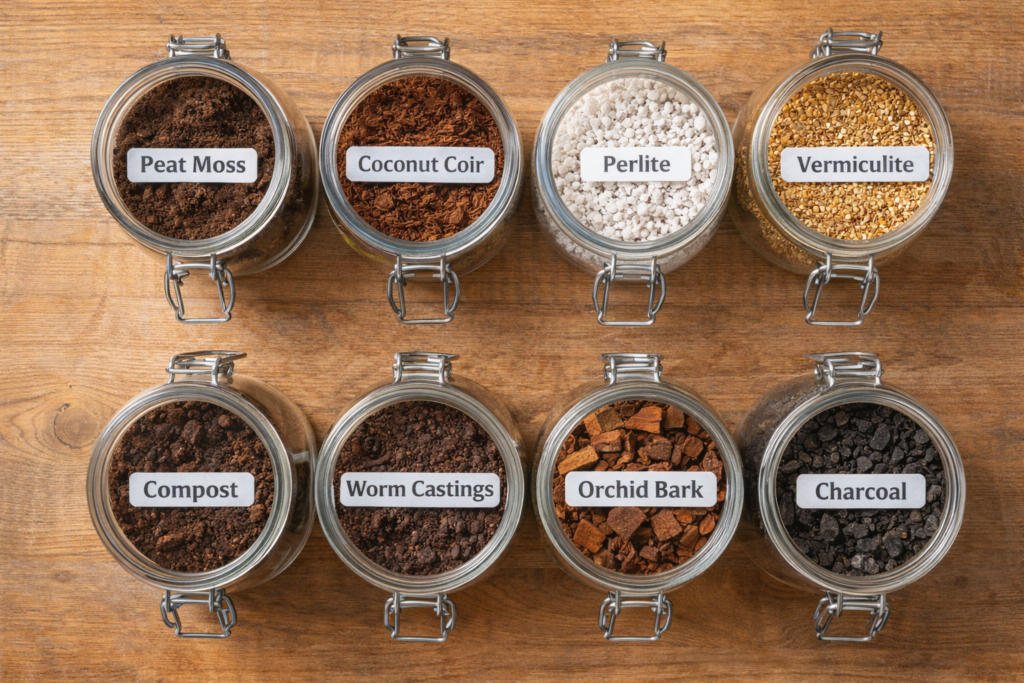
- Peat Moss: Lightweight, acidic (lowers pH), retains 10-20 times its weight in water. Sustainability note: Peat harvesting impacts wetlands. Many eco-conscious gardeners prefer alternatives.
- Coconut Coir: Made from coconut husks, sustainable, neutral pH, excellent water retention. Often sold in compressed bricks that expand when wet.
2. The Drainage Brigade
- Perlite: Those white, popcorn-like pieces. Super-lightweight, prevents compaction, improves aeration and drainage. Doesn’t decompose.
- Vermiculite: Gold/brown flakes that hold water and nutrients, then release them slowly. Great for seed starting and moisture-loving plants.
- Sand: Coarse horticultural sand (not beach or play sand) adds weight and improves drainage, especially for succulents.
3. The Nutrition Team
- Compost: Decomposed organic matter rich in nutrients and beneficial microbes. Should be well-aged to avoid burning plants.
- Worm Castings: Nature’s perfect fertilizer—nutrient-rich, odorless, improves soil structure.
- Slow-Release Fertilizer: Tiny coated pellets that feed plants gradually over 3-9 months.
4. The Specialists
- Orchid Bark: Chunky pine or fir bark pieces that provide the air pockets orchids need.
- Charcoal: Helps filter impurities and prevent souring in moisture-retentive mixes.
- Pumice: A porous volcanic rock that’s heavier than perlite but equally good for aeration.
The Right Mix for Every Plant Type
All-Purpose Potting Mix (The Workhorse)
Best for: Most common houseplants (pothos, philodendron, spider plants, etc.)
Typical composition: Peat/coir base + perlite + compost + slow-release fertilizer
Why it works: Balanced moisture retention and drainage suits most plants’ needs
DIY recipe: 2 parts peat/coir + 1 part perlite + 1 part compost
Succulent & Cactus Mix (Fast Drainage Required)
Best for: Succulents, cacti, snake plants, ZZ plants
Typical composition: More sand/perlite/pumice, less organic matter
Why it works: Mimics desert conditions—dries quickly, prevents root rot
DIY recipe: 1 part potting soil + 1 part coarse sand + 1 part perlite/pumice
Orchid Mix (Air, Air, and More Air)
Best for: Phalaenopsis, dendrobium, and other epiphytic orchids
Typical composition: Chunky bark, charcoal, sometimes perlite or sphagnum moss
Why it works: Orchid roots need to dry quickly and access air—they naturally grow on trees, not in soil
DIY recipe: 4 parts orchid bark (medium grade) + 1 part charcoal + 1 part perlite
African Violet Mix (Light and Slightly Acidic)
Best for: African violets and other gesneriads
Typical composition: Peat-heavy with perlite and vermiculite
Why it works: Retains moisture while allowing air flow; acidic pH these plants prefer
DIY recipe: 1 part peat moss + 1 part vermiculite + 1 part perlite
Seed Starting Mix (Fine and Nutrient-Light)
Best for: Starting seeds, rooting cuttings
Typical composition: Very fine peat/coir with vermiculite and/or perlite
Why it works: Fine texture for small roots; low nutrition forces seedlings to develop strong root systems
DIY recipe: 1 part peat/coir + 1 part vermiculite (no fertilizer needed initially)
(Suggested Image Placement 3: create a visual guide with five sections, each showing: 1) Plant photo (e.g., succulent), 2) Close-up of appropriate mix, 3) Icon of key need (e.g., drainage droplet with arrow down for succulents). Title: “Match Your Plant to Its Perfect Mix.”)
How to Read a Bag Label Like a Pro
Store-bought mixes use specific terminology:
- “Potting Soil” vs. “Potting Mix”: Often used interchangeably, but “mix” usually indicates a soilless blend
- “Moisture Control”: Contains water-holding crystals or extra coir—good for thirsty plants or forgetful waterers, dangerous for succulents
- “Organic”: Contains only organic-certified ingredients
- “With Fertilizer”: Usually has slow-release fertilizer mixed in
- “For Cacti & Succulents”: Should feel gritty and contain sand/pumice
- https://www.rhs.org.uk/
Warning Sign: If a bag feels heavy and dense, it’s probably not good for containers.
The Art of Mixing Your Own: Why and How
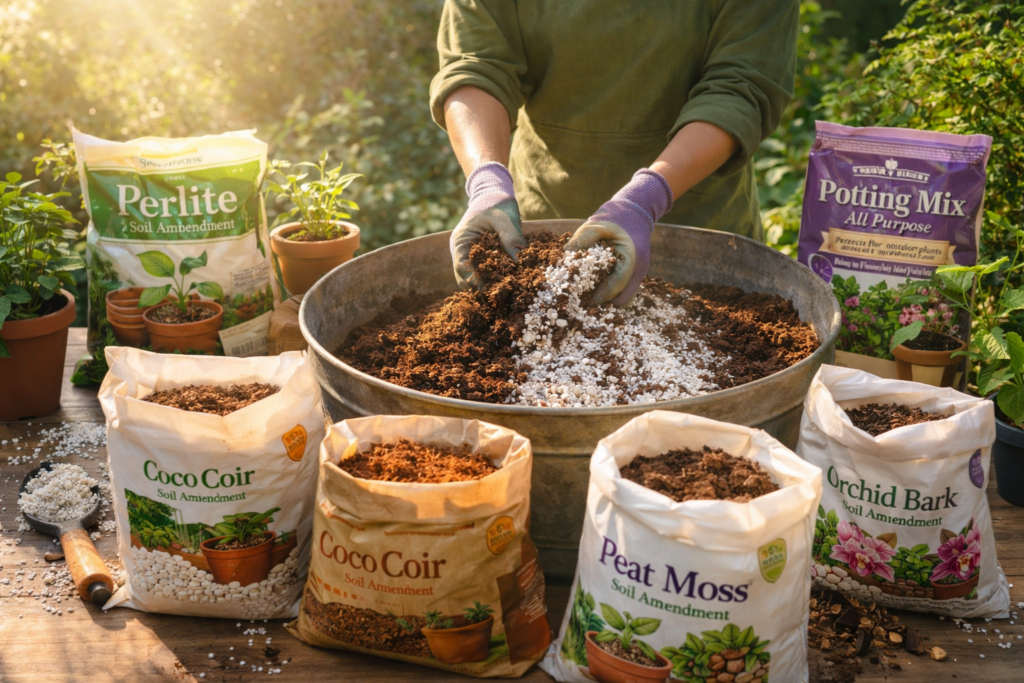
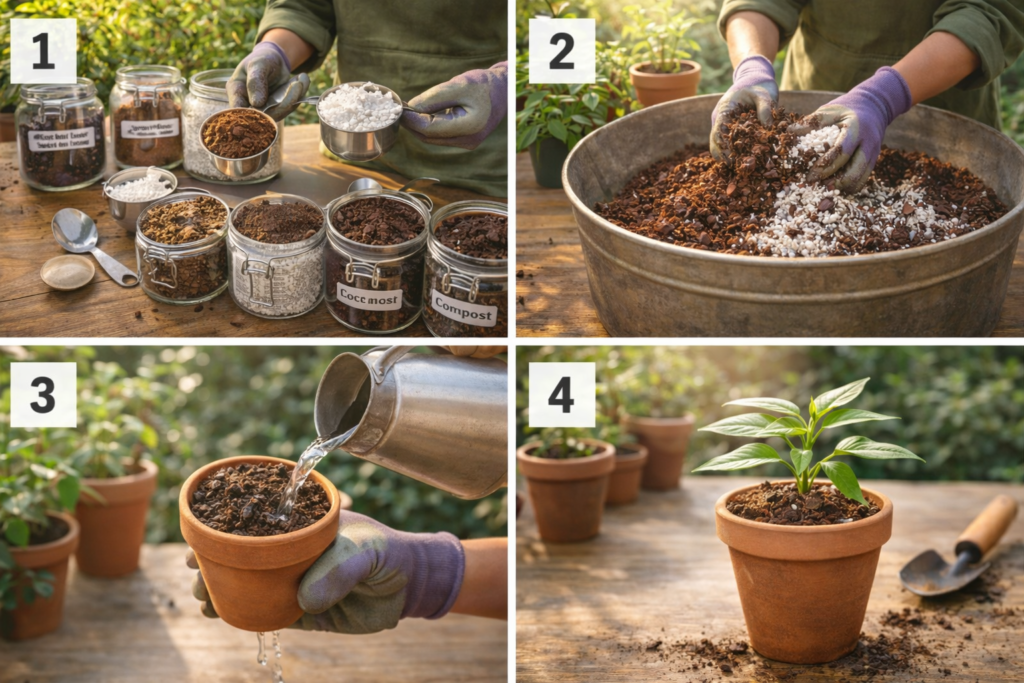
Creating custom mixes gives you complete control and can save money. Here’s your starter kit:
Basic Equipment:
- Large mixing container (wheelbarrow, storage tote)
- Measuring container (bucket or large pot)
- Trowel or garden shovel
- Gloves and mask (some ingredients are dusty)
Beginner-Friendly Universal Recipe:
- 2 parts coconut coir (hydrated)
- 1 part perlite
- 1 part compost
- ½ cup worm castings per gallon of mix
- Optional: Slow-release fertilizer per package instructions
Mixing Technique:
- Moisten dry ingredients (especially peat/coir) before mixing
- Add components in layers, then mix thoroughly
- Aim for uniform distribution—no clumps of any single ingredient
- Test drainage: Water should flow through in seconds, not minutes
Special Considerations and Problem-Solving
When to Refresh Potting Mix:
- Annually for actively growing plants
- When water sits on top instead of absorbing
- When roots are circling or growing out drainage holes
- When plants show nutrient deficiencies despite fertilizing
Common Mix Problems and Solutions:
- Too dense/heavy: Add more perlite or orchid bark
- Dries too quickly: Add more coir/peat or vermiculite
- Stays wet too long: Add more drainage material (perlite, sand, pumice)
- Fungus gnats: Let mix dry completely between waterings; top with sand
The pH Factor:
- Most plants prefer slightly acidic soil (6.0-7.0 pH)
- Peat moss lowers pH; some tap water raises it
- Simple pH test kits available at garden centers
- Adjust with garden lime (raises pH) or sulfur (lowers pH) if needed
Beyond the Bag: Sustainable Choices
As gardeners, we can make eco-friendly choices:
- Choose coconut coir over peat moss when possible
- Reuse potting mix by refreshing with compost and perlite
- Make your own compost from kitchen scraps
- Look for recycled content in potting mix bags
- Support companies with sustainable practices
Your Foundation for Growth
Understanding potting mix is one of the most empowering skills a gardener can develop. It moves you from reacting to plant problems to preventing them. From guessing to knowing. From hoping to thriving.
Start small: Next time you repot, examine your current mix. Feel its texture. Watch how it drains. Then make one intentional change based on what you’ve learned here. Your plants will respond with stronger growth, better health, and more resilience. http://growplantcare.com
Remember: Great gardening begins from the ground up—or in this case, from the potting mix up. Invest in the foundation, and everything you grow will stand taller, bloom brighter, and live longer.