
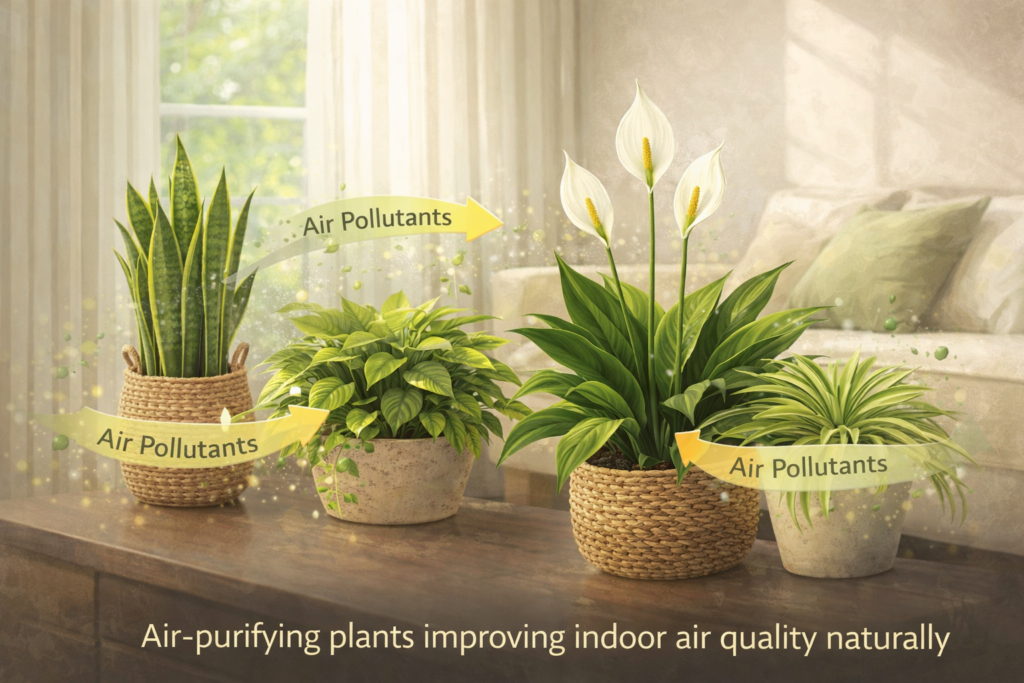
Transform your home into a fresher, healthier space with scientifically proven air-purifying plants
Introduction: Breathing Easier with Nature’s Air Filters
In our increasingly indoor-centric lives, air quality has become a silent concern. While we focus on visible cleanliness, invisible pollutants—formaldehyde from furniture, benzene from plastics, trichloroethylene from cleaning products—accumulate in our homes. What if the solution wasn’t a expensive air purifier, but living greenery? Back in 1989, NASA conducted a groundbreaking Clean Air Study that identified specific plants with remarkable air-purifying abilities. Today, we revisit that science with modern understanding to help you select the most effective plants for cleaner indoor air.
Understanding the NASA Clean Air Study: What It Really Means
The Original Research
In 1989, NASA scientist Dr. B.C. Wolverton published a study exploring how plants could purify air in sealed space stations. The study tested common houseplants against three major indoor pollutants:
- Formaldehyde (found in furniture, carpets, and insulation)
- Benzene (from plastics, synthetic fibers, and tobacco smoke)
- Trichloroethylene (in paints, varnishes, and adhesives)
Modern Interpretation
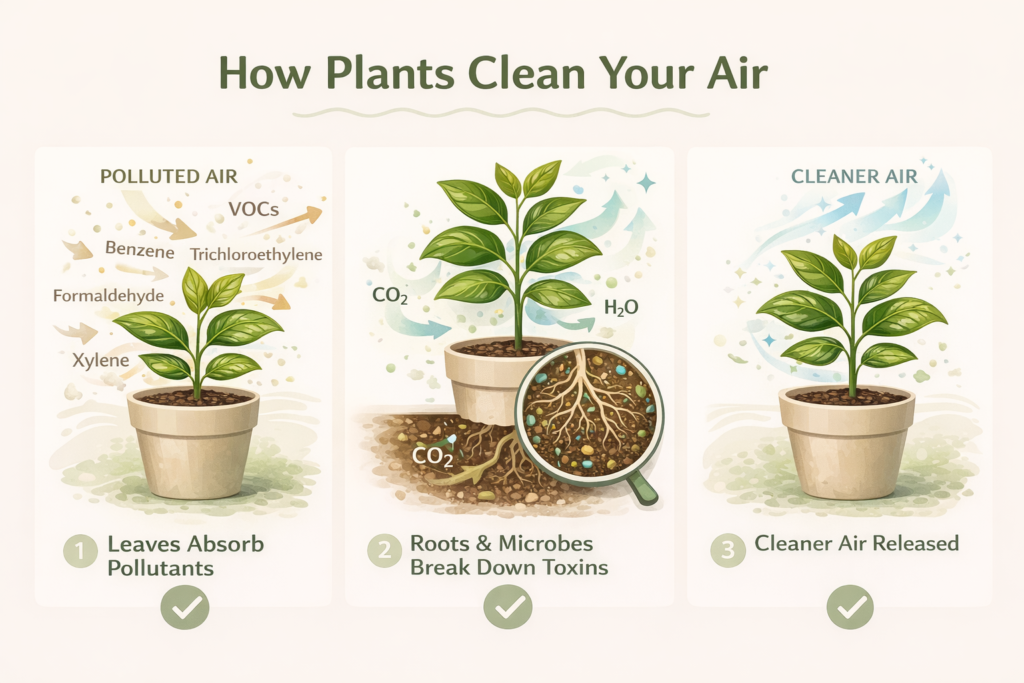
While NASA’s study was conducted in sealed chambers, subsequent research has confirmed that plants do improve indoor air quality through:
- Phytoremediation: Plants absorb pollutants through their leaves and roots
- Microbial activity: Soil microorganisms break down toxins
- Transpiration: Plants release moisture, helping pollutants settle
Important Note: Plants complement, but don’t replace, proper ventilation and source control of pollutants.
Top 10 NASA-Studied Air-Purifying Plants for Your Home
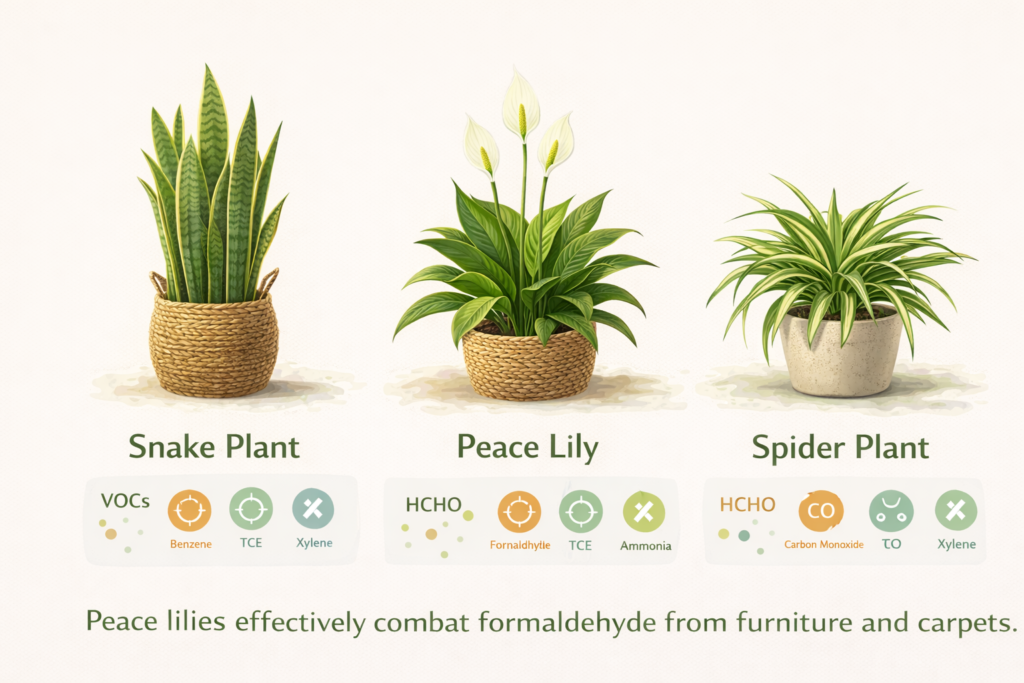
1. Snake Plant (Sansevieria trifasciata) – The Bedroom Champion
Air pollutants removed: Formaldehyde, benzene, trichloroethylene, xylene, toluene
Special feature: Releases oxygen at night (unlike most plants)
Care level: Beginner-friendly; tolerates low light and irregular watering
NASA rating: Removed 52.6% of benzene in 24 hours in studies
Where to place: Bedrooms (for night-time oxygen), living rooms, offices
Optimal number: 2-3 medium plants per bedroom
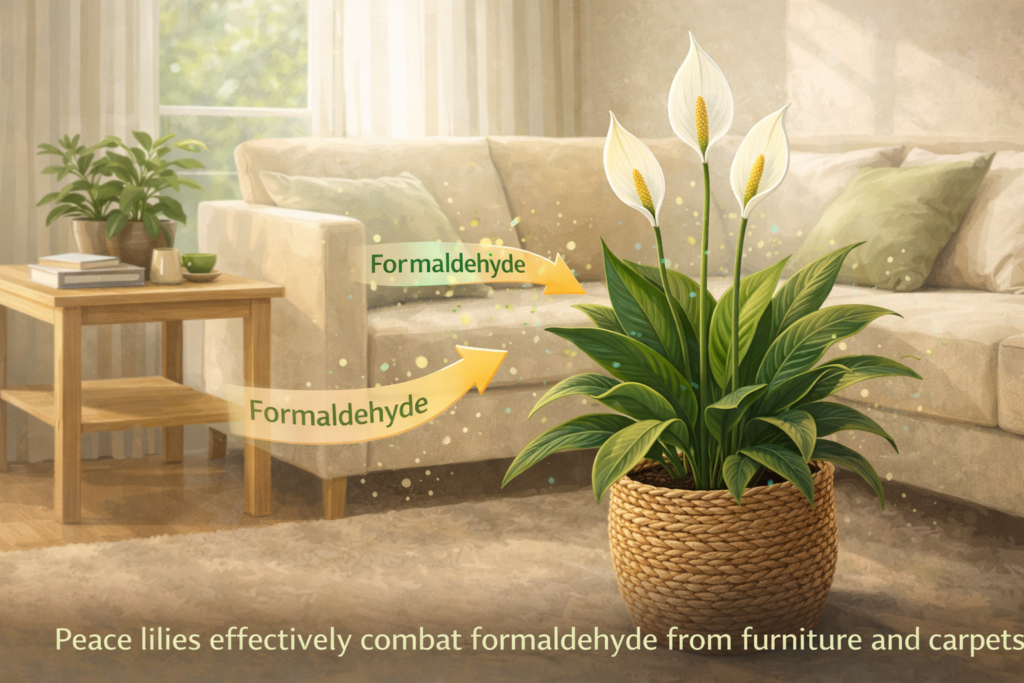
2. Peace Lily (Spathiphyllum) – The Formaldehyde Fighter
Air pollutants removed: Formaldehyde, benzene, trichloroethylene, ammonia, xylene
Special feature: Shows visible signs when thirsty (drooping), then revives quickly
Care level: Easy to moderate; needs consistent moisture and indirect light
NASA rating: Among top performers for multiple pollutant removal
Where to place: Bathrooms (loves humidity), kitchens, laundry rooms
Warning: Toxic to pets if ingested
3. Spider Plant (Chlorophytum comosum) – The Prolific Purifier
Air pollutants removed: Formaldehyde, carbon monoxide, xylene
Special feature: Produces numerous “spiderettes” that can be propagated
Care level: Very easy; thrives on neglect, non-toxic to pets
NASA rating: Removed 95% of formaldehyde from sealed chamber in 24 hours
Where to place: Kitchens (combats carbon monoxide), hanging baskets, shelves
Bonus: Safe for homes with curious pets
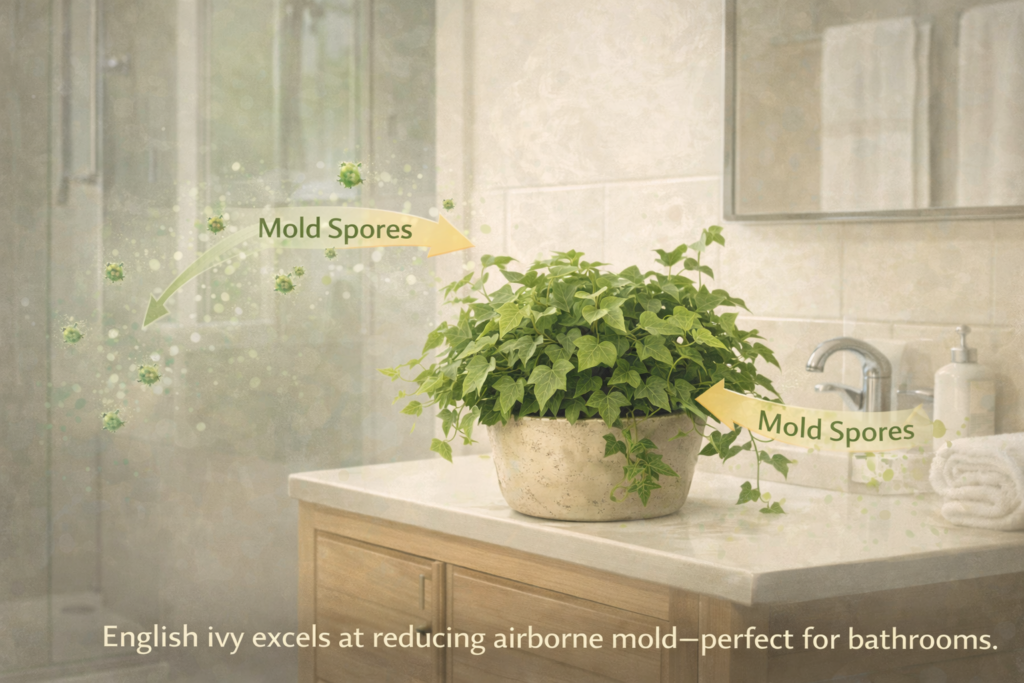
4. English Ivy (Hedera helix) – The Mold Reducer
Air pollutants removed: Formaldehyde, benzene, trichloroethylene, airborne mold
Special feature: Particularly effective against airborne mold particles
Care level: Moderate; needs consistent moisture and cooler temperatures
NASA rating: Top performer for benzene removal
Where to place: Bathrooms, basements, or as hanging plant in humid areas
Consideration: Can be invasive outdoors; keep as indoor plant only
5. Bamboo Palm (Chamaedorea seifrizii) – The Moisture Balancer
Air pollutants removed: Formaldehyde, benzene, trichloroethylene
Special feature: Adds beneficial humidity to dry indoor air
Care level: Moderate; needs bright indirect light and regular watering
NASA rating: Excellent all-around air cleaner
Where to place: Living rooms, near heating vents, dry climates
Size: Can grow 4-12 feet tall—great floor plant
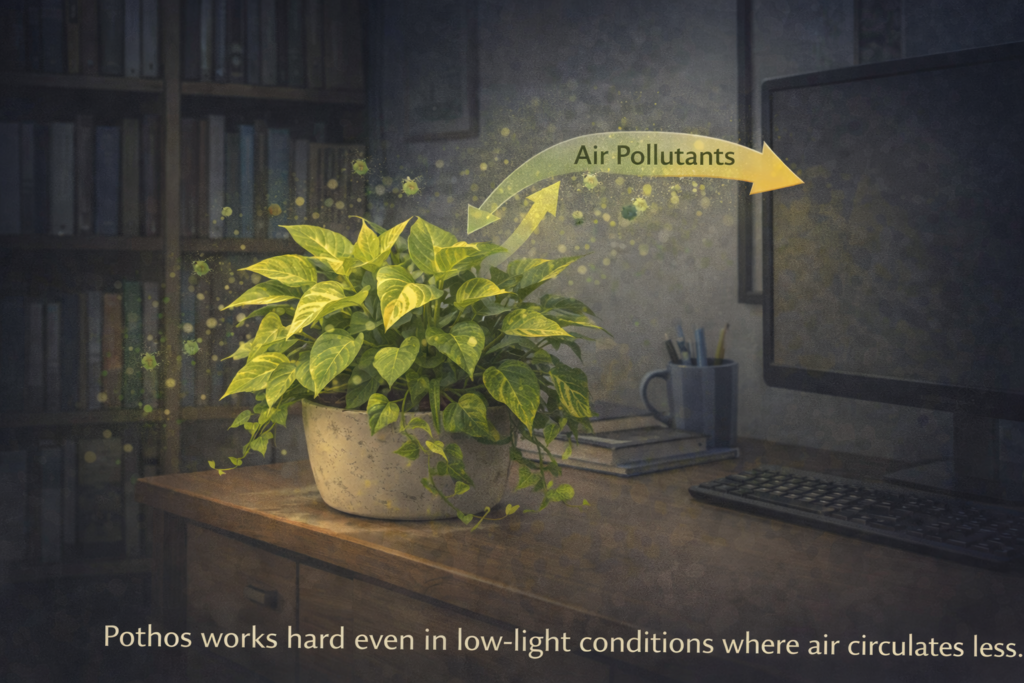
6. Devil’s Ivy/Pothos (Epipremnum aureum) – The Low-Light Worker
Air pollutants removed: Formaldehyde, benzene, carbon monoxide, xylene
Special feature: Thrives in low light where other plants struggle
Care level: Very easy; drought-tolerant, fast-growing
NASA rating: Effective across multiple pollutants
Where to place: Dark corners, offices with fluorescent lighting, hallways
Propagation: Easy to grow from cuttings in water
7. Boston Fern (Nephrolepis exaltata) – The Humidity Hero
Air pollutants removed: Formaldehyde, xylene, toluene
Special feature: Excellent natural humidifier; releases moisture into air
Care level: Moderate to difficult; needs consistent moisture and humidity
NASA rating: Most effective plant for removing formaldehyde in studies
Where to place: Dry rooms, near heaters, living rooms
Care tip: Mist regularly or place on pebble tray with water
8. Rubber Plant (Ficus elastica) – The Statement Purifier
Air pollutants removed: Formaldehyde, carbon monoxide, trichloroethylene
Special feature: Large leaves provide maximum surface area for purification
Care level: Easy; drought-tolerant, adaptable to various light conditions
NASA rating: Effective formaldehyde remover
Where to place: Living rooms, entryways, as dramatic floor plant
Growth: Can become quite large—perfect for filling vertical space
9. Chinese Evergreen (Aglaonema) – The Low-Maintenance All-Rounder
Air pollutants removed: Formaldehyde, benzene, carbon monoxide
Special feature: Tolerates very low light and irregular care
Care level: Very easy; one of the most forgiving houseplants
NASA rating: Good performer across multiple pollutants
Where to place: Bedrooms, bathrooms, offices, dim corners
Varieties: Many beautiful cultivars with silver, pink, or red patterns
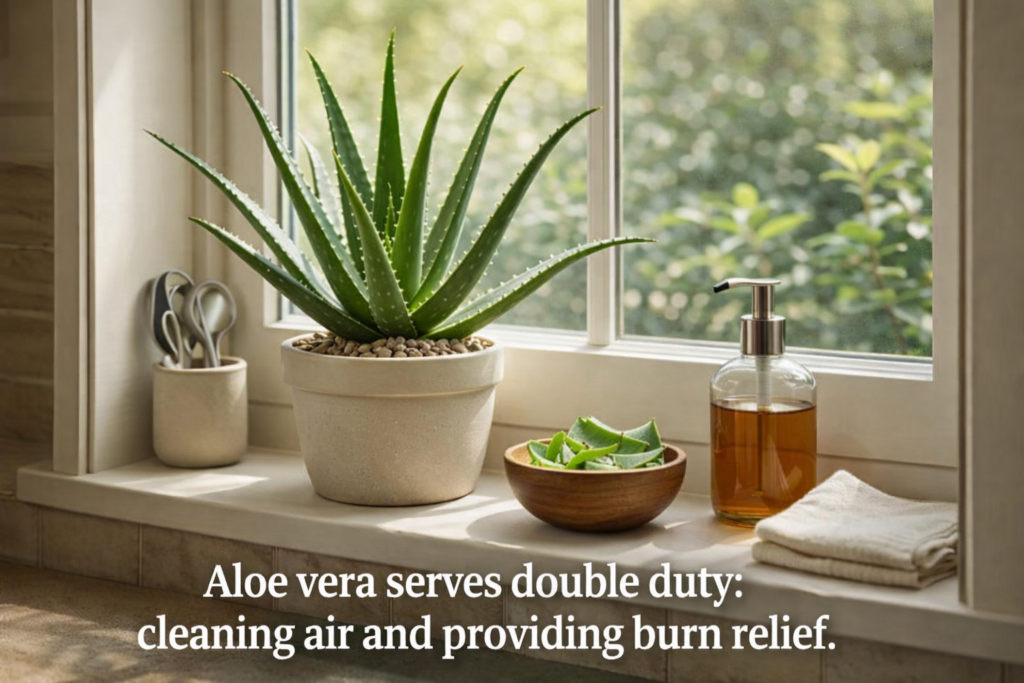
10. Aloe Vera – The Dual-Purpose Healer
Air pollutants removed: Formaldehyde, benzene
Special feature: Gel inside leaves soothes burns; plant cleans air
Care level: Very easy; succulent needs little water, loves sun
NASA rating: Effective against formaldehyde from cleaning products
Where to place: Kitchens (for burns), sunny windowsills
Bonus: Useful gel always available for minor burns
Maximizing Air Purification: Placement & Quantity Strategy
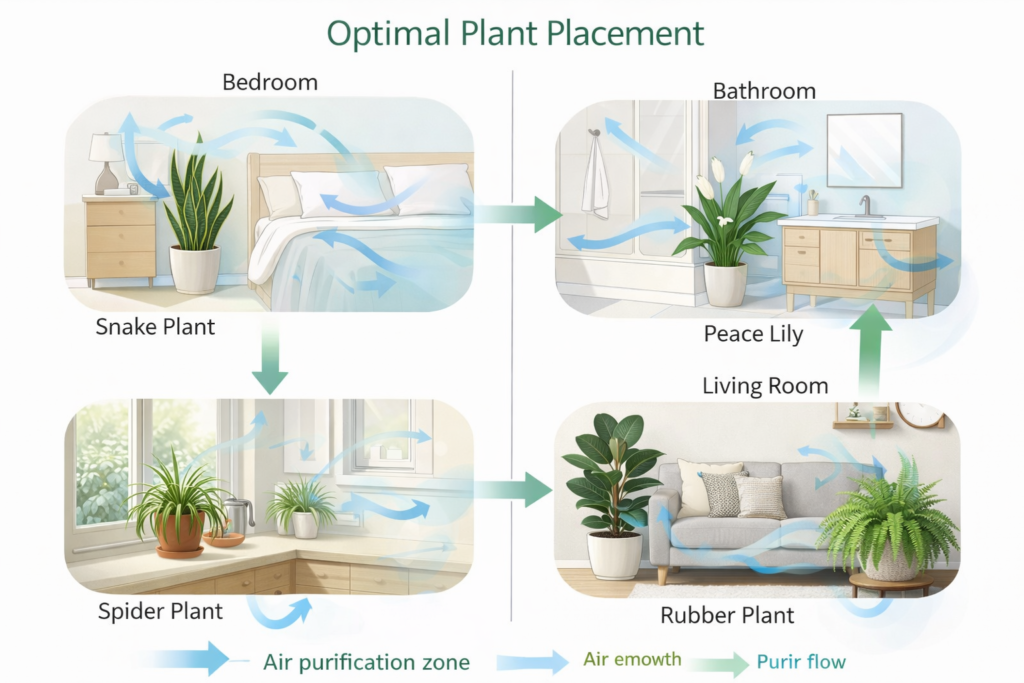
The Right Plants in the Right Places
- Bedrooms: Snake plants (night oxygen), Chinese evergreens
- Kitchens: Aloe vera, spider plants (carbon monoxide), herbs
- Bathrooms: Peace lilies, English ivy (mold), ferns
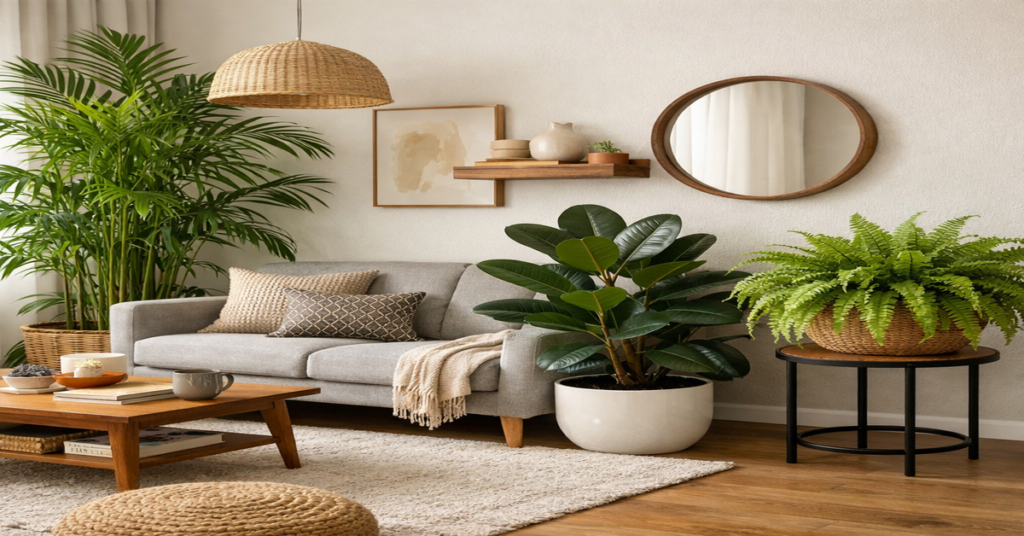
- Living Areas: Rubber plants, bamboo palms, Boston ferns
- Offices: Pothos, snake plants, spider plants
How Many Plants Do You Need?
NASA recommended 15-18 plants in 6-8 inch diameter pots for a 1,800 square foot home. Modern interpretation suggests:
- 1 large plant per 100 square feet
- 2-3 medium plants per room
- Multiple small plants clustered together
- please visit http://growplantcare.com
Remember: More leaf surface area = more air purification.
Creating “Clean Air Zones”
- Cluster plants together for combined effect
- Place near pollutant sources (new furniture, printers, kitchens)
- Ensure good air circulation around plants
- Keep leaves clean—dust reduces effectiveness
Care Tips for Maximum Air-Purifying Efficiency
1. Healthy Plants Work Best
- Clean leaves monthly with damp cloth
- Remove dead leaves promptly
- Repot when root-bound
- Use appropriate potting mix
2. Optimize Environmental Conditions
- Moderate light (most purifying plants need bright indirect light)
- Proper watering (neither drought nor soggy soil)
- Occasional fertilizing during growing season
- Adequate humidity (group plants or use pebble trays)
3. Complement with Other Strategies
- Open windows regularly for ventilation
- Use exhaust fans in kitchens and bathrooms
- Choose low-VOC paints and materials
- Regular cleaning to reduce dust and allergens
Debunking Air-Purifying Plant Myths
Myth 1: “A few plants can replace an air purifier”
Truth: Plants complement but don’t replace mechanical filtration for severe allergies or high pollution.
Myth 2: “All plants purify air equally”
Truth: NASA identified specific effective plants; others have minimal impact.
Myth 3: “More plants automatically mean cleaner air”
Truth: Placement, plant health, and environmental factors significantly impact effectiveness.
Myth 4: “The NASA study means plants work miracles”
Truth: The study showed potential in sealed chambers; real-world effects are more modest but still beneficial.
Beyond NASA: Recent Research Updates
Recent studies have added to our understanding:
- 2017 Japanese study: Confirmed formaldehyde removal by several houseplants
- 2018 Australian research: Showed plants reduce CO2 levels in offices
- 2020 review: Confirmed psychological benefits (reduced stress) from indoor plants
- https://www.nasa.gov/feature/ames/plant-air-purification/
The holistic benefit: Even if air purification is moderate, the proven stress reduction, humidity regulation, and aesthetic benefits make plants worthwhile.
Starting Your Air-Purifying Indoor Garden
Beginner’s Starter Kit:
- Snake Plant (for bedroom, low maintenance)
- Spider Plant (for kitchen, safe for pets)
- Pothos (for low-light areas, easy propagation)
Intermediate Expansion:
- Peace Lily (for bathroom, shows watering needs)
- Bamboo Palm (for living room, adds humidity)
Advanced Collection:
- Boston Fern (for dry rooms, excellent humidifier)
- Rubber Plant (statement piece, large leaf surface)
Conclusion: Breathing Life into Your Spaces
Air-purifying plants offer a beautiful, natural approach to healthier indoor living. While they’re not a complete substitute for good ventilation and source control, NASA’s research—confirmed by subsequent studies—shows they make a measurable difference. Beyond air quality, they bring proven psychological benefits: reduced stress, increased creativity, and greater connection to nature.
Start with one or two plants from NASA’s list. Place them thoughtfully. Care for them consistently. Observe not just their growth, but how your space feels. Many plant owners report their homes feeling “fresher,” “lighter,” or “more alive” after introducing air-purifying plants.
The cleanest air comes not from technology alone, but from integrating nature into our daily spaces. Your journey to cleaner air—and a more beautiful home—begins with a single, leafy companion.