
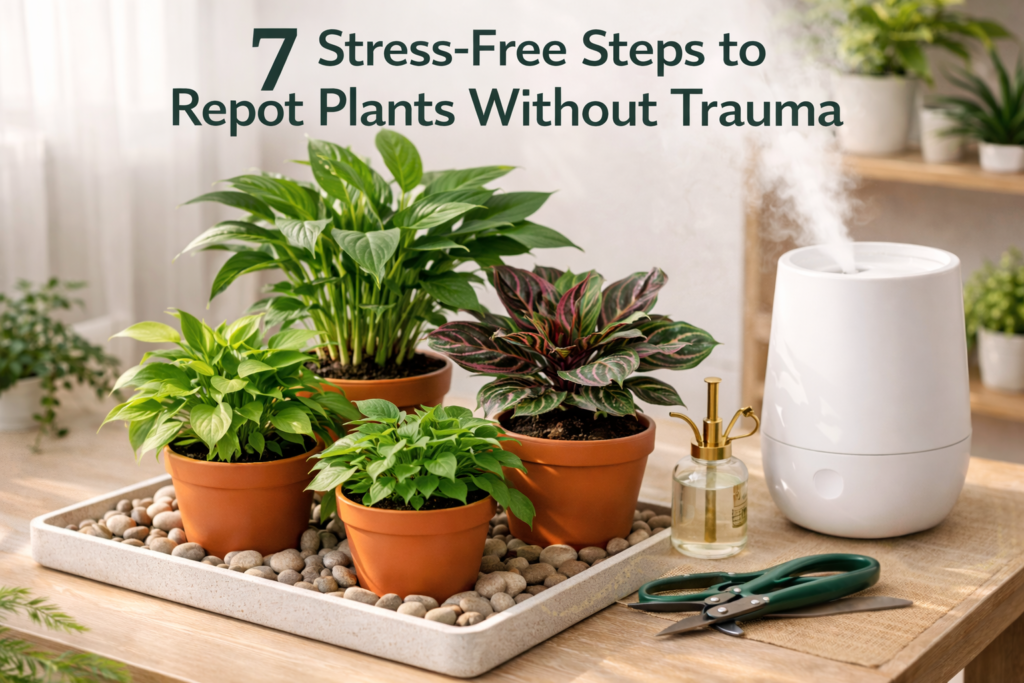
A step-by-step guide to giving your plants room to grow—without the anxiety
Introduction: Why Repotting Doesn’t Have to Be Scary
The moment arrives: roots peek from drainage holes, growth has slowed despite perfect care, or water runs straight through without being absorbed. Your plant needs repotting. Stress-free repotting helps you move plants into new pots without trauma, root damage, or transplant shock. For many plant owners, this triggers anxiety—visions of root damage, transplant shock, or that heartbreaking post-repotting wilt. But what if repotting could be a gentle, almost meditative process that leaves both you and your plant feeling refreshed and renewed?
This guide transforms repotting from a stressful chore into a nurturing ritual. We’ll cover not just the how, but the when and why, with techniques that minimize shock and maximize success. This stress-free repotting approach focuses on gentle handling, correct timing, and proper aftercare to reduce plant shock. Whether you’re moving a tiny succulent to its first upgrade or giving a mature monstera a new home, these methods ensure a smooth transition.
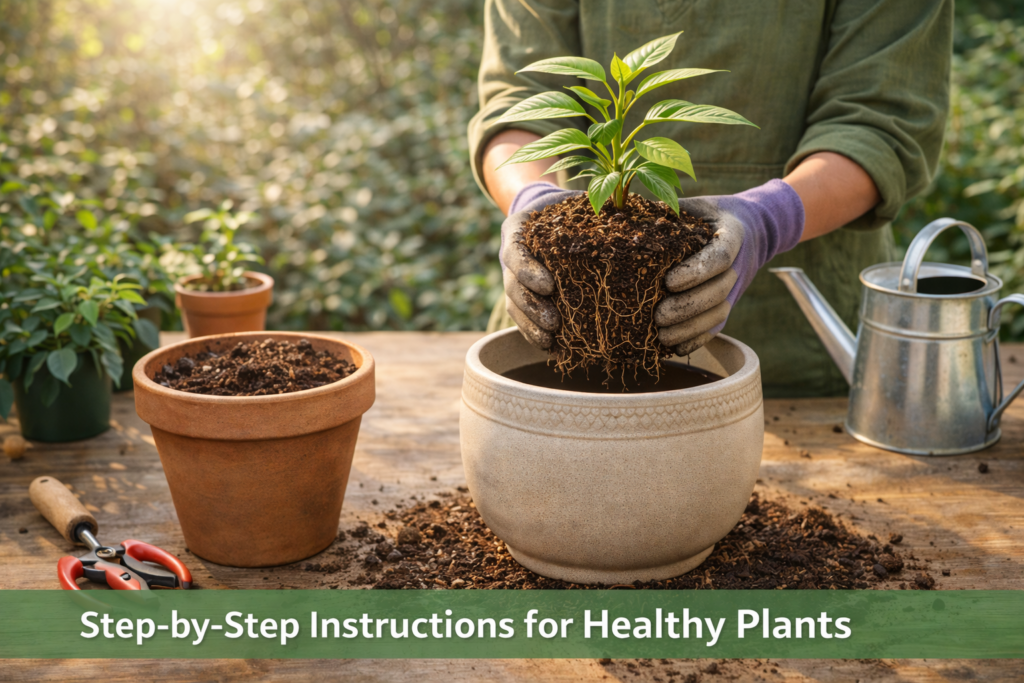
The Three Golden Rules of Repotting
Before we touch a single plant, understand these non-negotiable principles:
- Don’t Repot Unnecessarily: Every repotting involves some stress. Only repot when there’s a clear reason.
- Size Matters: Move up just 1-2 inches in pot diameter. Too large a pot holds excess wet soil that can rot roots.
- Timing is Everything: Spring and early summer are ideal—plants are entering active growth and recover fastest.

Signs Your Plant is Begging for a New Home
Not sure if it’s time? Your plant sends clear signals:
Definite “Repot Me Now” Signs:
- Roots growing through drainage holes (the most obvious sign)
- Roots circling the top of the soil or visible at the surface
- Water runs straight through without being absorbed
- Plant dries out unusually fast (needs daily watering)
- Plant is top-heavy and tips over easily
“Consider Repotting” Signs:
- Slowed growth during the growing season
- Salt or mineral buildup (white crust) on soil surface
- Soil has decomposed and become compacted
- You haven’t repotted in 2-3 years (for actively growing plants)
- American Orchid Society Repotting Instructions https://www.aos.org/
When NOT to Repot:
- Newly purchased plants (let them acclimate for 2-4 weeks first)
- Plants in bloom (wait until flowering finishes)
- Stressed or sick plants (address health issues first)
- During dormant periods (late fall through winter for most plants)
Gathering Your Repotting Toolkit
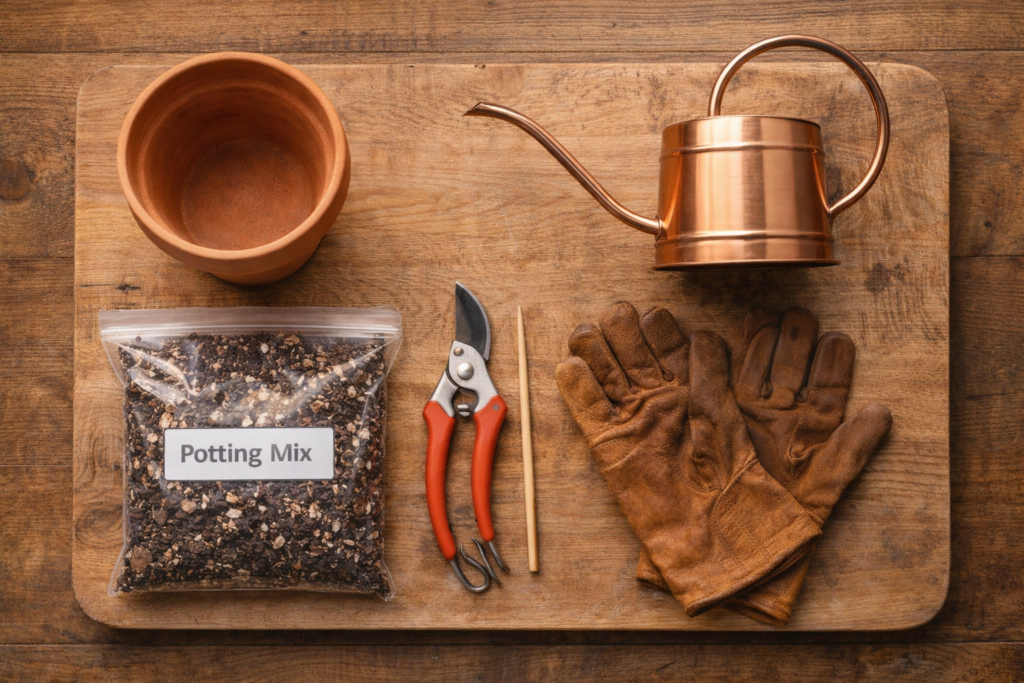
Being prepared makes everything smoother. Assemble these essentials:
Essential Tools:
- New pot with drainage holes (1-2 inches wider than current)
- Fresh potting mix appropriate for your plant type
- Pruning shears or sharp scissors (sterilized with rubbing alcohol)
- Trowel or large spoon for moving soil
- Gloves if handling spiky or irritating plants
- Newspaper or drop cloth to contain the mess
Optional but Helpful:
- Chopstick or pencil for teasing apart roots
- Activated charcoal (for bottom layer in pots without drainage)
- Rooting hormone (for any root pruning you might do)
- Watering can with room-temperature water ready
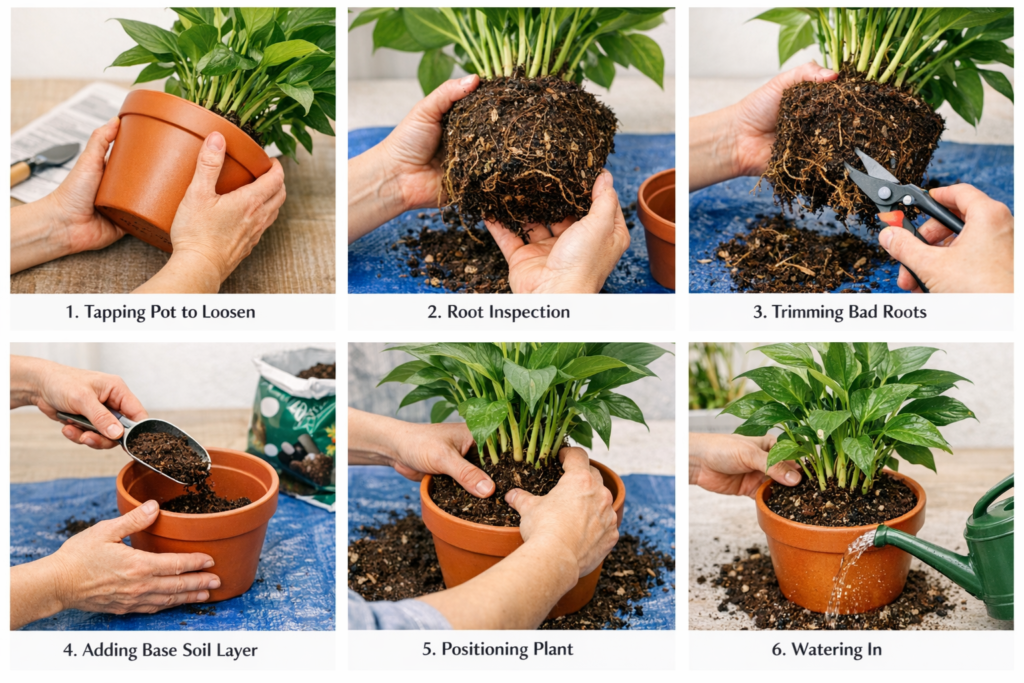
The Gentle Stress-Free Repotting Method
Step 1: The Pre-Game Preparation
- Water your plant 1-2 days before repotting—moist roots are more flexible and resilient
- This stress-free repotting approach focuses on gentle handling, correct timing, and proper aftercare to reduce plant shock.
- Have everything ready in your workspace before removing the plant
- If reusing an old pot, scrub it thoroughly with soap and water
Step 2: The Gentle Exit
- Turn the pot sideways and support the plant at its base
- Gently tap the pot’s sides and bottom to loosen the root ball
- If stuck, run a knife around the inside edge or squeeze flexible pots
- Never pull by the stems—cradle the root mass as it emerges
Step 3: The Root Inspection
- Gently loosen the outer roots with your fingers
- Look for healthy roots (firm and white) vs. unhealthy (mushy and brown)
- If roots are severely tangled, make vertical cuts up the sides (like scoring a loaf of bread)
- Trim away only clearly dead or rotting roots with sterilized shears
Step 4: Preparing the New Home
- Place a piece of mesh, coffee filter, or shard over drainage holes (keeps soil in)
- Add a base layer of fresh potting mix
- The goal: plant should sit at the same depth it was before
- Test the height by placing the root ball in the empty pot
Step 5: The Settling In
- Center your plant in the new pot
- Fill around sides with fresh mix, gently tamping to eliminate large air pockets
- Leave about 1 inch of space between soil surface and pot rim for watering
- Don’t pack soil tightly—roots need air spaces
Step 6: The First Drink
- Water thoroughly until water runs from drainage holes
- This settles the soil around roots and eliminates air pockets
- You may need to add more soil after watering as it settles
- Empty the saucer after 20-30 minutes
Special Cases and Expert Techniques
Repotting Root-Bound Plants:
For those dense, tangled root balls:
- Make 3-4 vertical cuts with a clean knife
- Gently tease apart the outer roots
- Don’t worry about breaking some roots—this stimulates new growth
- Consider root pruning for severely bound plants (remove up to 1/3 of root mass)
Repotting Delicate or Fuzzy Plants:
- African violets, begonias, and fuzzy-leaved plants dislike wet leaves
- Water from the bottom after repotting
- Handle leaves minimally or use soft cloth gloves
Dividing Plants:
Perfect for peace lilies, snake plants, spider plants:
- Remove entire root ball and gently pull apart natural divisions
- Each section should have both roots and leaves
- Use a clean, sharp knife if necessary
- Plant divisions immediately and keep slightly moist
After-Bloom Orchid Repotting:
- Orchids need special bark mix, not soil
- Remove old, decaying bark and trim dead roots (hollow or mushy)
- Choose a pot that just fits the remaining roots—they like being snug
- Stake for support if needed
The Critical Aftercare: Minimizing Transplant Shock
This is where many repottings fail. Follow these post-repotting rules:
First Week: The Recovery Period
- Place in bright, indirect light—avoid direct sun even for sun-loving plants
- Hold off on fertilizing for 3-4 weeks (fresh soil has nutrients)
- Resist the urge to overwater—only water when top inch is dry
- Expect some drooping or leaf loss—this is normal adjustment
Signs of Trouble vs. Normal Adjustment:
- Normal: Slight wilting for 1-3 days, a few lower leaves yellowing
- These signs indicate when stress-free repotting is necessary to keep plants healthy and growing.
- Concerning: Severe wilting beyond 5 days, many leaves dropping, stem rot
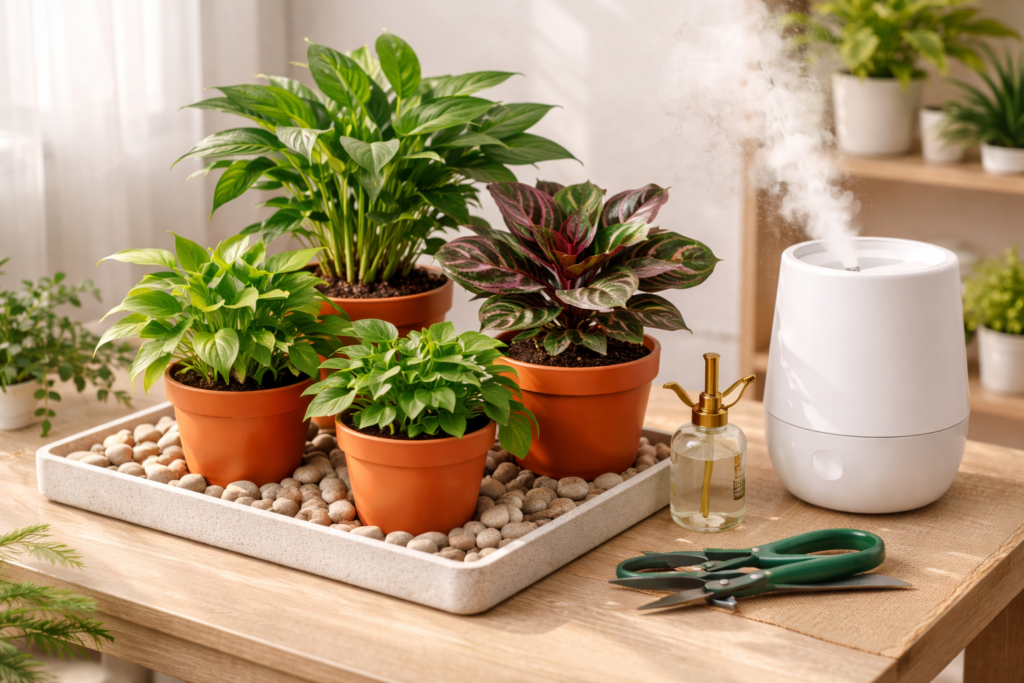
- Solution if troubled: Check for overwatering, ensure proper drainage, increase humidity with pebble tray
The No-Stress Environment:
- Maintain consistent temperatures (avoid drafts)
- Proper aftercare is essential for successful stress-free repotting and fast plant recovery.
- Consider a humidity boost for tropical plants (group plants together or use humidifier)
- Don’t move the plant to a completely new location while it adjusts
Common Repotting Mistakes and How to Avoid Them
Mistake #1: Going Too Big
- Problem: Large pot holds excess moisture, causing root rot
- Solution: Only size up 1-2 inches in diameter
Mistake #2: Wrong Soil Type
- Problem: Using generic mix for specialized plants
- Solution: Use cactus mix for succulents, orchid bark for orchids, etc.
Mistake #3: Burying Too Deep
- Problem: Stems rot when buried below original soil line
- Solution: Keep plant at same depth it was growing
Mistake #4: Overwatering Immediately
- Problem: Drowning already stressed roots
- Solution: Water once thoroughly, then wait until soil is dry
Mistake #5: Fertilizing Too Soon
- Problem: Burning tender new roots
- Solution: Wait 3-4 weeks before resuming fertilization
Creating a Repotting Ritual
Transform repotting from chore to self-care:
- Choose a calm time when you won’t be rushed
- Play soothing music
- Appreciate your plant’s growth and root system
- Celebrate giving your plant room to expand
- Clean up thoroughly and admire your work
When to Call for Help (Professional Repotting)
Consider professional help for:
- Very large, heavy plants (like mature fiddle leaf figs)
- Extremely valuable or sentimental plants
- Severe root rot situations requiring intensive care
- Physical limitations that make repotting difficult
The Gift of Growth
Repotting is ultimately an act of faith—faith in your plant’s resilience, faith in your growing skills, and faith in the future growth you’re making space for. Each successful repotting builds your confidence and deepens your connection to your plants. With patience and the right technique, stress-free repotting becomes a simple and rewarding part of plant care.
Remember: Plants want to grow. They want to thrive. By giving them fresh soil and room for their roots, you’re not causing stress—you’re removing barriers to their natural expansion. Approach the process with gentle hands, clear intention, and the knowledge that a little temporary discomfort leads to long-term flourishing. For more details visit again http://growplantcare.com
Your next step? Choose one plant that’s showing repotting signs. Gather your materials. Take a deep breath. And give that plant the gift of space to become its fullest, most beautiful self.