
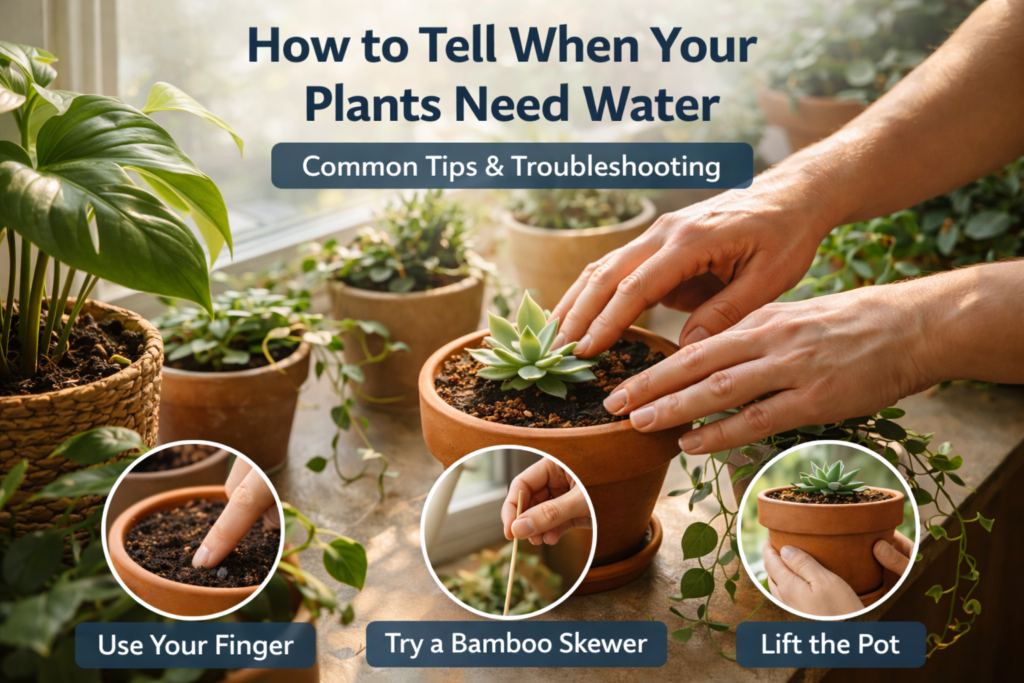
Stop guessing and start knowing with these foolproof techniques for perfect watering every time
Introduction: The Watering Dilemma Solved
How to tell when plants need water is one of the most important skills for beginner gardeners and indoor plant lovers.
This guide will transform you from an anxious guesser to a confident plant communicator. We’ll explore not just the “how much” but the “how to know” of watering—the signs, the science, and the simple tools that remove all doubt. Whether you’re caring for a single succulent or a jungle of tropical plants, these techniques will give you clarity and control.
Why Schedule Watering Fails Every Time
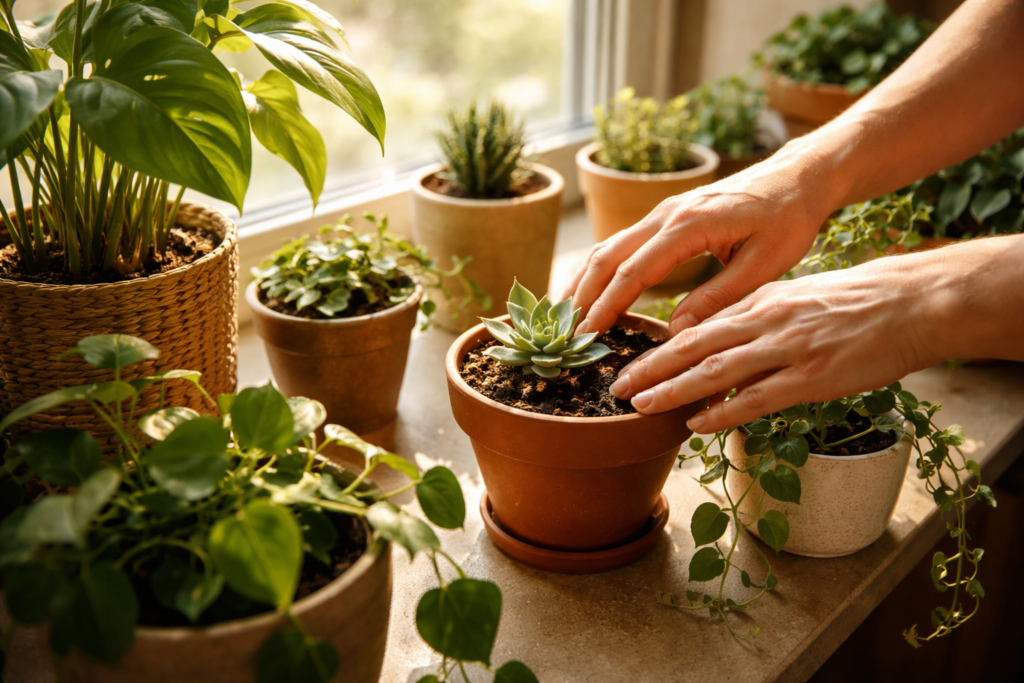
“Water every Tuesday” is the most common—and most dangerous—advice beginners receive. Here’s why schedules don’t work:
- Seasonal Changes: Plants drink more in active growing seasons (spring/summer) and less when dormant (fall/winter).
- Environmental Factors: Heating, air conditioning, humidity, and temperature all affect how quickly soil dries.
- Plant Size and Type: A large monstera in a small pot needs water more often than a cactus in a large container.
- Pot Material: Terracotta pots “breathe” and dry faster than plastic or ceramic.
The solution? Become a plant detective rather than a calendar-watcher.
The 5 Surefire Ways to Check for Thirst
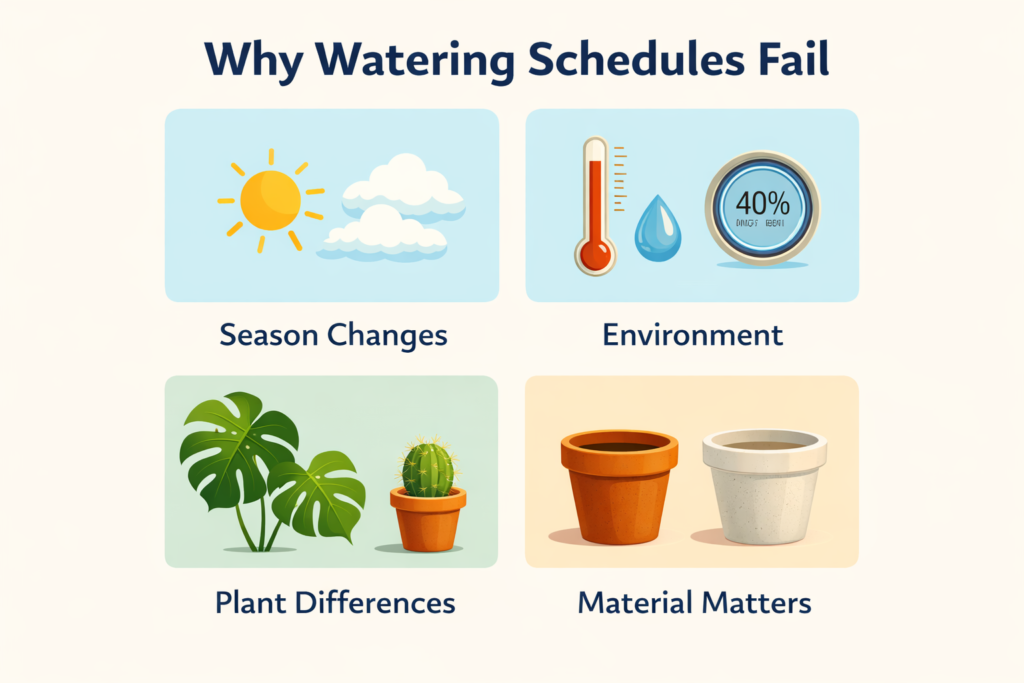
Method 1: The Finger Test (The Gold Standard)
How it works: Insert your index finger into the soil up to your second knuckle (about 2 inches deep).
What to feel for:
- Dry soil = Time to water (for most plants)
- Cool, moist soil = Wait and check again in a few days
- Wet, muddy soil = You’ve overwatered; let it dry out
Pro Tip: For small pots (under 6 inches), check to the first knuckle. For succulents and cacti, wait until completely dry throughout.
Method 2: The Chopstick/Bamboo Skewer Test
How it works: Insert a dry wooden chopstick or bamboo skewer deep into the soil, leave for 60 seconds, then remove.
Reading the results:
- Completely dry = Water thoroughly
- Slightly damp with soil sticking = Check again in 2-3 days
- Wet with obvious moisture = Don’t water
Why it’s great: This method gives you information about moisture levels at root depth, not just surface level.
Method 3: The Lift Test (For Lightweight Pots)
How it works: Lift the pot to gauge its weight.
What you’re checking:
- Light as a feather = Definitely needs water
- Some weight but not heavy = Getting close to watering time
- Heavy = Plenty of moisture remaining
Training yourself: Water a plant thoroughly, lift it to feel the “watered weight.” Wait until it’s dry, lift to feel the “dry weight.” Soon you’ll recognize the difference instantly.
Method 4: Soil Color and Texture Clues
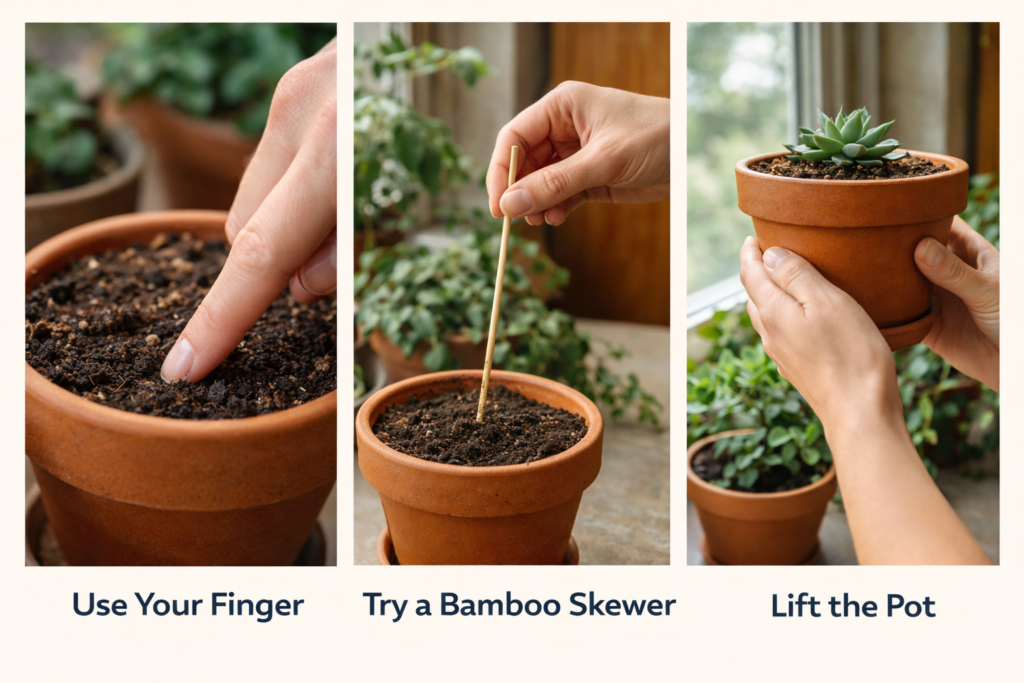
Visual indicators:
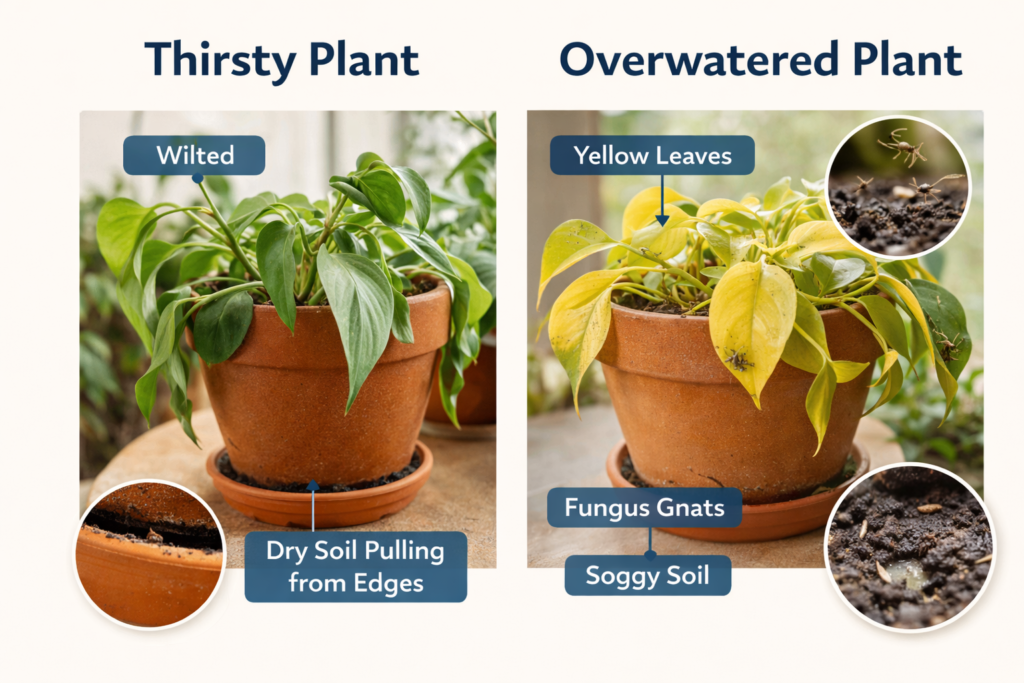
- Dry soil pulls away from the edges of the pot and appears lighter in color
- Wet soil is darker and may have slight condensation on the pot’s inner sides
- Peaty mixes turn from dark brown to light tan when dry
Touch indicators:
- Dry soil feels crumbly and doesn’t stick together
- Moist soil holds together when squeezed gently
- Saturated soil feels muddy and releases water when squeezed
Method 5: Moisture Meters (For Tech Lovers)
How they work: These inexpensive tools measure electrical conductivity in soil—more water means better conductivity.
Using them correctly:
- Insert probe deep into soil (near roots but away from the pot edge)
- Wait 30-60 seconds for reading
- Clean probe after each use
- Important: Test in multiple spots and don’t rely 100%—calibrate with finger test occasionally
Best for: Large floor plants, deep pots, or if you have physical limitations that make other methods difficult.
Reading Your Plant’s Body Language
Plants communicate their needs through physical changes. Learn to read these signs:
Thirst Signals (Time to Water):
- Slight wilting or drooping (most common in tropical plants like peace lilies)
- Leaves losing rigidity (feel less firm)
- Slowed growth (especially in growing season)
- Dry, crispy leaf edges (if combined with dry soil)
“I’m Drowning!” Signals (Overwatered):
- Yellowing leaves, especially lower ones
- Consistently wet soil days after watering
- Mushy stems or leaves
- Fungus gnats (they breed in constantly moist soil)
- Foul odor from soil (indicates root rot)
The Perfect Watering Technique: It’s Not Just About When
Knowing when to water is half the battle. Here’s how to do it right:
Once you learn how to tell when plants need water, you can prevent yellow leaves, root rot, and weak growth.
Step 1: Prepare Your Water
- Room temperature is best—cold water can shock roots
- Let tap water sit overnight if your water is heavily chlorinated
- Consider rainwater or filtered water for sensitive plants like calatheas
Step 2: Water Thoroughly and Evenly
- Pour water slowly around the entire soil surface, not just one spot
- Continue until water flows freely from drainage holes
- This ensures all roots get moisture, not just surface roots
Step 3: The Crucial Drain Step
- Never let plants sit in water in their saucers
- Empty saucers 15-20 minutes after watering
- This prevents root rot and salt buildup
Step 4: Return to Proper Location
- Most plants prefer to dry out slightly between waterings
- Return to their spot with proper light conditions
- Observe over next few days to learn your plant’s drinking pace
Special Cases and Exceptions
Plants That Hate Wet Feet (Succulents, Cacti, Snake Plants):
- Wait until completely dry throughout the pot
- When you water, do so thoroughly, then let dry out completely again
- In winter, water may be needed only once a month or less
Plants That Like Consistent Moisture (Ferns, Peace Lilies, Calatheas):
- Don’t let these dry out completely
- Water when top inch feels dry
- Consider self-watering pots or humidity trays
- http://growplantcare.com
Orchids (The Special Case):
- Most orchids are potted in bark, not soil
- Water when roots turn from green to silvery-white
- Run water through the pot for 30 seconds, let drain completely
Creating Your Personal Watering Profile
Every plant-person relationship is unique. Here’s how to create a custom watering guide for your plants:
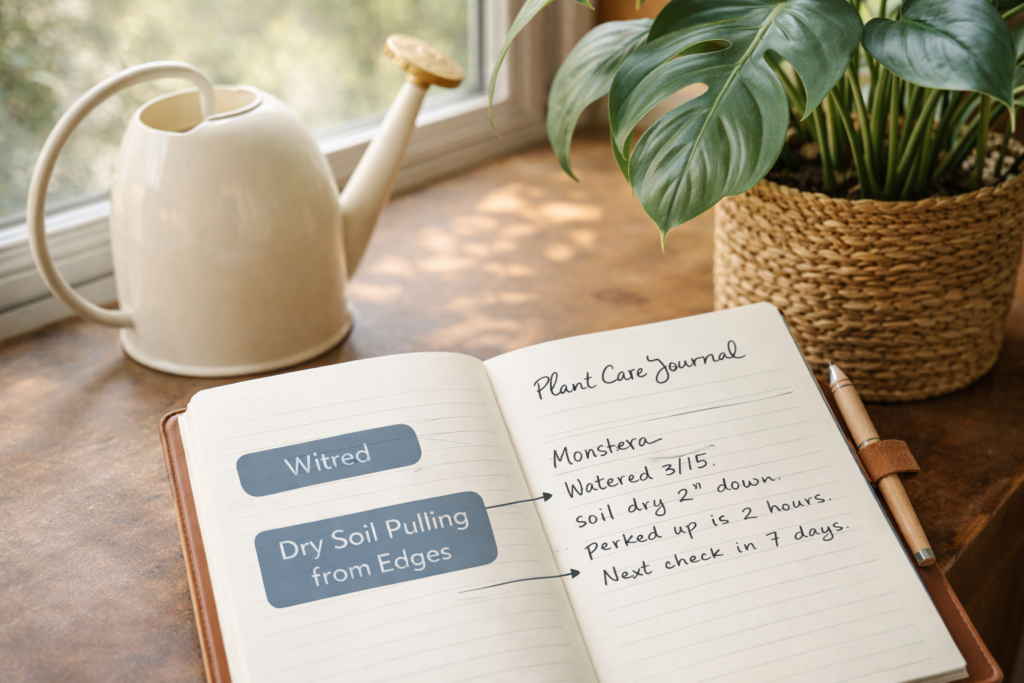
- Keep a simple log for the first month with each new plant: Date watered, method used, how soil felt, plant’s appearance.
- Note environmental changes: Did you turn on heat/AC? Has weather been cloudy?
- Adjust as you learn: Your fern might need water every 5 days in summer but every 10 in winter.
- Trust your growing experience: Over time, you’ll develop intuition that combines all these methods.
The Freedom of Knowing
The anxiety around watering disappears when you have reliable methods to check your plant’s needs. You’re no longer following arbitrary rules but responding to actual conditions. This knowledge transforms plant care from a chore into a conversation—a gentle back-and-forth between you and another living being.
Remember: It’s better to slightly under-water than over-water. Most plants recover quickly from thirst but struggle to come back from root rot. When in doubt, wait a day and check again.
Your next step? Choose one method from this guide—perhaps the finger test—and apply it to all your plants this week. Notice the differences. Celebrate the certainty. You’ve just upgraded from plant guesser to plant communicator.